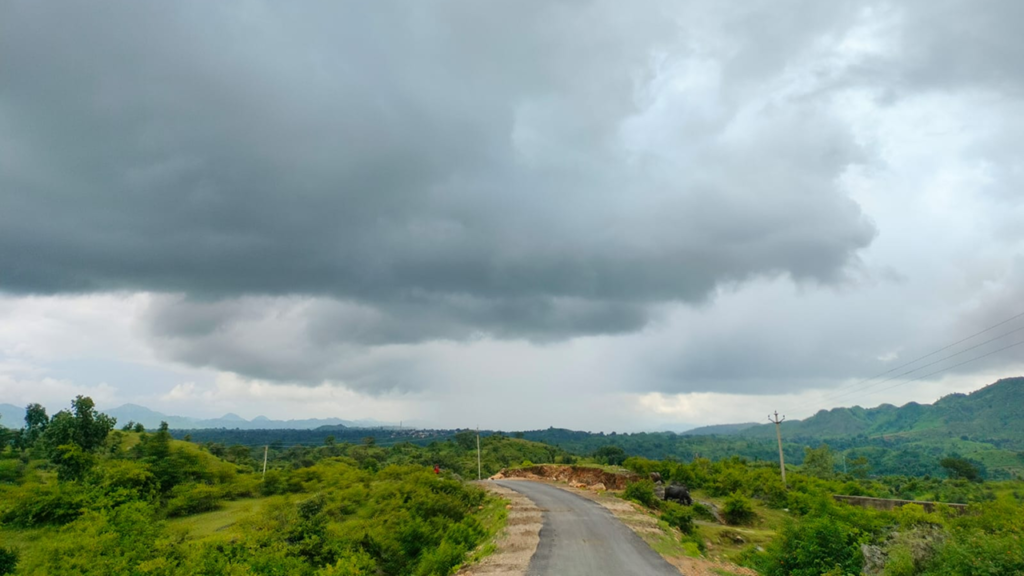

Ice-caps rapidly melting — too fast to arrest glacial slide.
In the near future — there will be no water left
or too much water that is undrinkable,
excess water that will drown us all.
Disembodied floats, afloat like Noah’s Ark —
no GPS, no pole-star navigation, no fossil fuel to burn away —
just maps with empty grids and names of places that might exist.
—‘Disembodied’ by Sudeep Sen
Ice-caps rapidly melting — too fast to arrest glacial slide.
In the near future — there will be no water left
or too much water that is undrinkable,
excess water that will drown us all.
Disembodied floats, afloat like Noah’s Ark —
no GPS, no pole-star navigation, no fossil fuel to burn away —
just maps with empty grids and names of places that might exist.
—‘Disembodied’ by Sudeep Sen
In a world wracked by the climate catastrophe, vehicles – or in Sen’s words, “unpeopled hollow metal-shells” – move about directionless, looking for an elusive compass. Perhaps this will be our state, too, in the future, and that of all living beings.
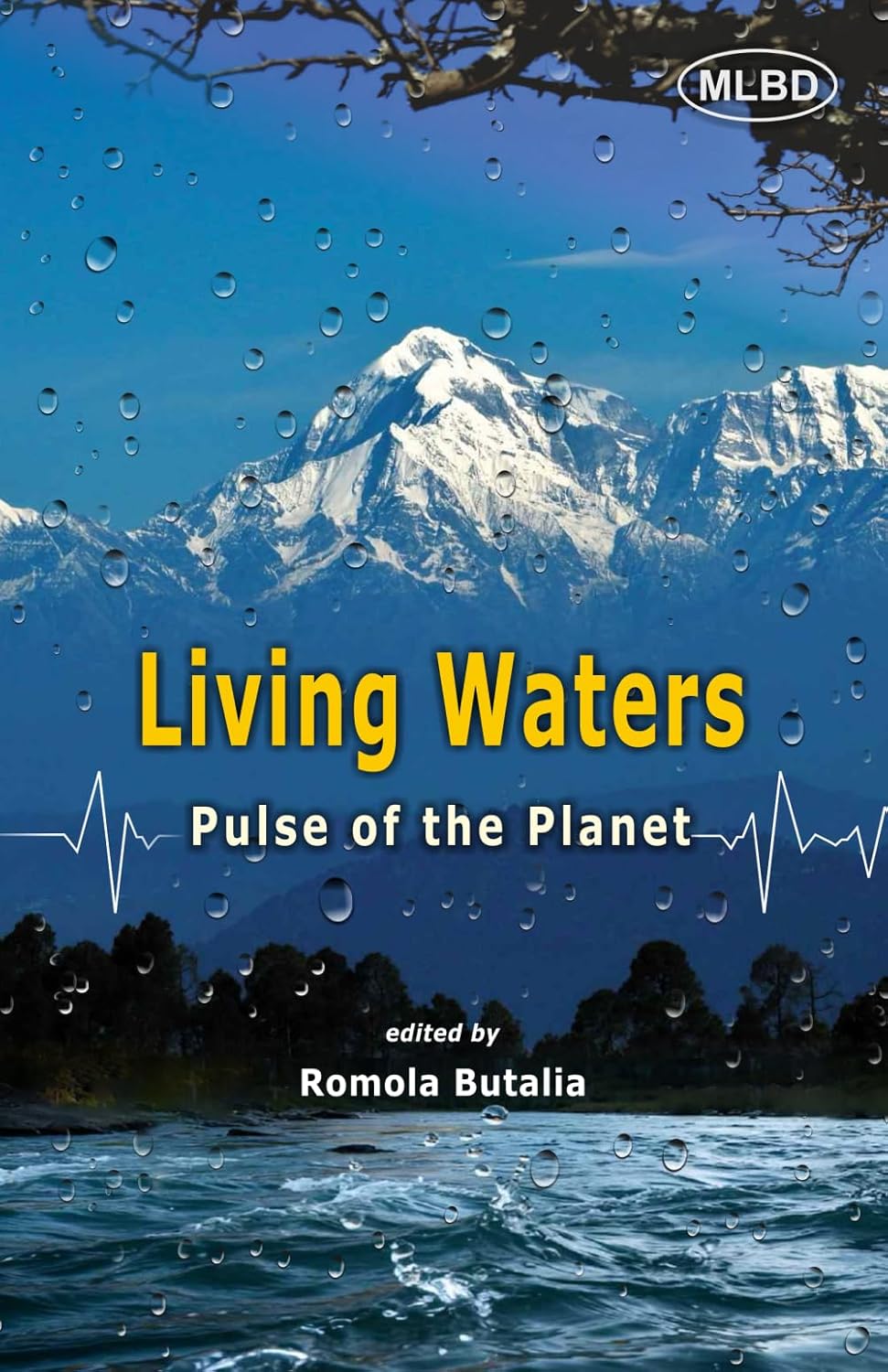
A selection of poems from Sen’s book, Anthropocene, opens Romola Butalia’s anthology, Living Waters: Pulse of the Planet (2025). A collection of 20 essays, its aim is to start a dialogue with the reader about how anthropogenic activities are disrupting the planet’s hydrological cycle and what we can do about it.
Butalia, a writer and conservationist living in the Kumaon Himalaya in Uttarakhand, brings together a diversity of voices working across a wide spectrum. Contributors include poets, scientists, ecologists, environmentalists, podcasters, journalists, systems architects, representatives of think tanks and NGOs, cleantech angel investors and so on. She does this to make a singular point: “we can no longer work silently in silos,” she says in her introduction.
As we hurtle towards the Sixth Anthropocene extinction, Butalia feels that cross-sectoral and cross-cultural dialogues are urgently needed as are community-focused conversations. Through the anthology, she hopes to make the science of the water crisis widely accessible while also inviting the reader to connect with water spiritually. The way ahead, she explains, will come not from agonising over what has caused the climate crisis, but from hearing the rumble of the earth and feeling the vibrations of water.
WATER’S JOURNEY FROM MOUNTAIN TO SEA TO AIR
The book addresses water issues primarily in India but also in the Hindu Kush Himalaya (HKH) region, which stretches across eight countries in South and Central Asia. The essays dive into a whole host of topics, tracing water’s journey from under the earth’s surface to mountaintops, hillsides, valleys, plains, rivers, oceans and the atmosphere.
Specifically, they highlight the problems that arise from our misuse and mismanagement of water and of course, climate change. Among them are depleting aquifers, drying springs, retreating glaciers, dammed rivers, wetland destruction, industrial and municipal pollution of water, plastic and thermal pollution of oceans, changing monsoon patterns and so on.
However, Butalia’s goal isn’t only to paint a grim picture. There is hope, the essays suggest: sustainable uses of water can be adopted and micro-shifts can alter local climates. The idea, to put it in her words, is to “implement changes in healing the earth and waters and connected systems, by acknowledging the current trajectory, and course-correcting towards a future we must collectively envision.”
THE GROUNDWATER CRISIS AND TRADITIONAL HYDRAULICS
The book’s dialogue with the reader begins with a poem by Sen that evokes wonder for water’s markings on rock. There’s another that’s dismayed by pilgrims’ littering on the banks of the Tungabhadra River at Hampi. Still another is ironic – it speaks of how black and red rain (caused by atmospheric pollutants) leave not a drop of water to drink, no space for humans, “only beauty of contamination”.
Sen writes that “aquifers crave life” – and perhaps, they crave water too. The first essay, in fact, by hydrogeologist Himanshu Kulkarni reminds us that India is the largest user of groundwater globally. And this overextraction has depleted aquifers, which has affected the water flow of springs, streams and rivers.
The depletion began more than a century ago, when we transitioned from community to individual uses of groundwater and thus, made it unsafe for drinking in large parts of the country. Kulkarni argues that we must adopt an “aquifer-centric” approach to groundwater management, rather than focus on overextraction, and work on replenishing aquifers with the communities that rely on them.
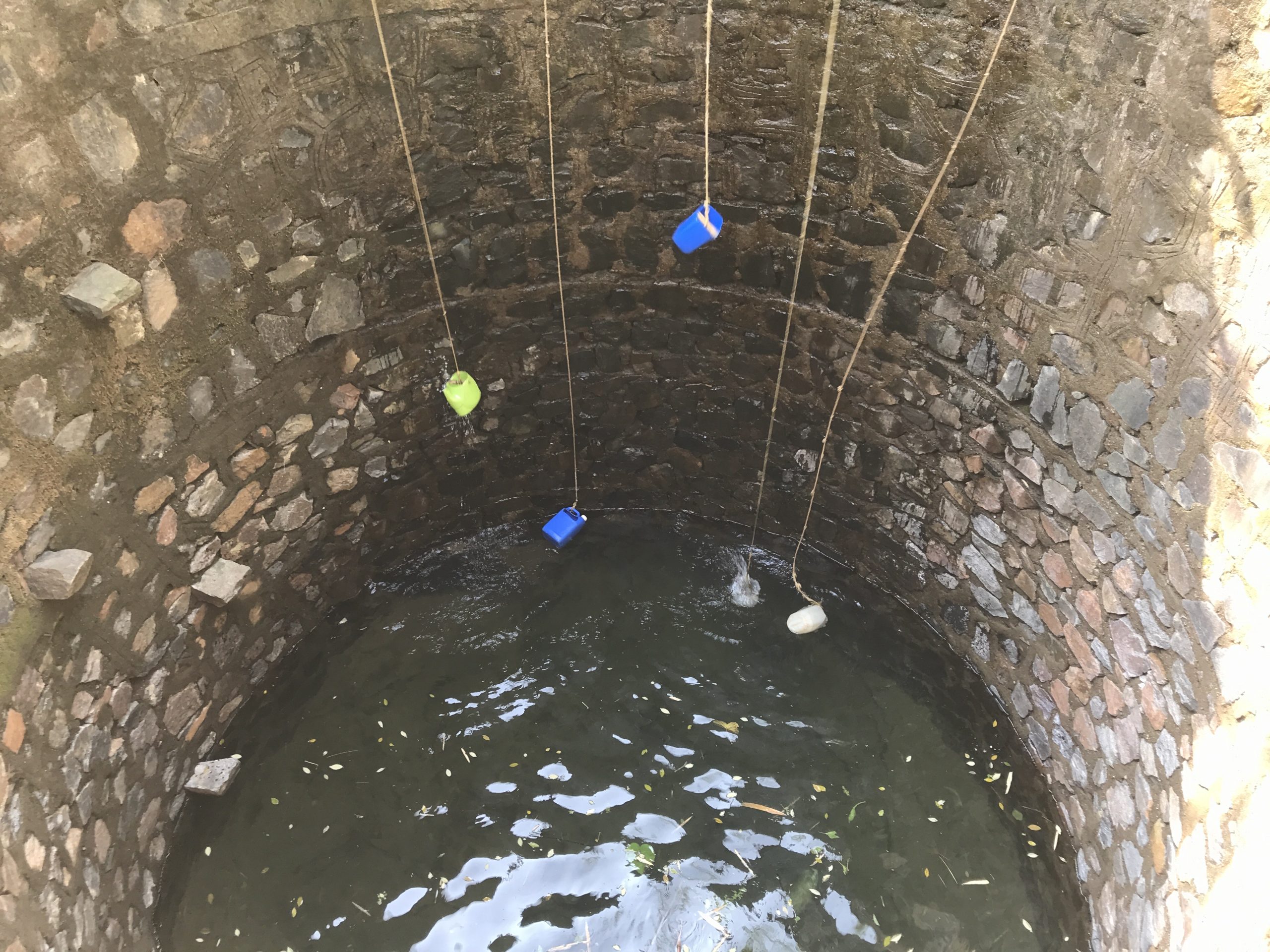
Like Kulkarni, Vasudha Pant talks about India’s ancient history of sustainable groundwater use via traditional dug wells, stepwells and in Uttarakhand, naulas and dharas. Pant, an agricultural scientist who has worked on reviving the state’s dying rivers, says that naulas and dharas – underground reservoirs and above-ground water channels, respectively – are facing a decline.
The reasons are multiple: the groundwater crisis, unsustainable development, urbanisation, rural-to-urban migration and climate change. Since naulas and dharas can recharge groundwater and provide year-round water access, they must be revived, Pant says, and adapted for urban use, especially in water-stressed regions.
WHY SPRINGS AND THE CRYOSPHERE MATTER
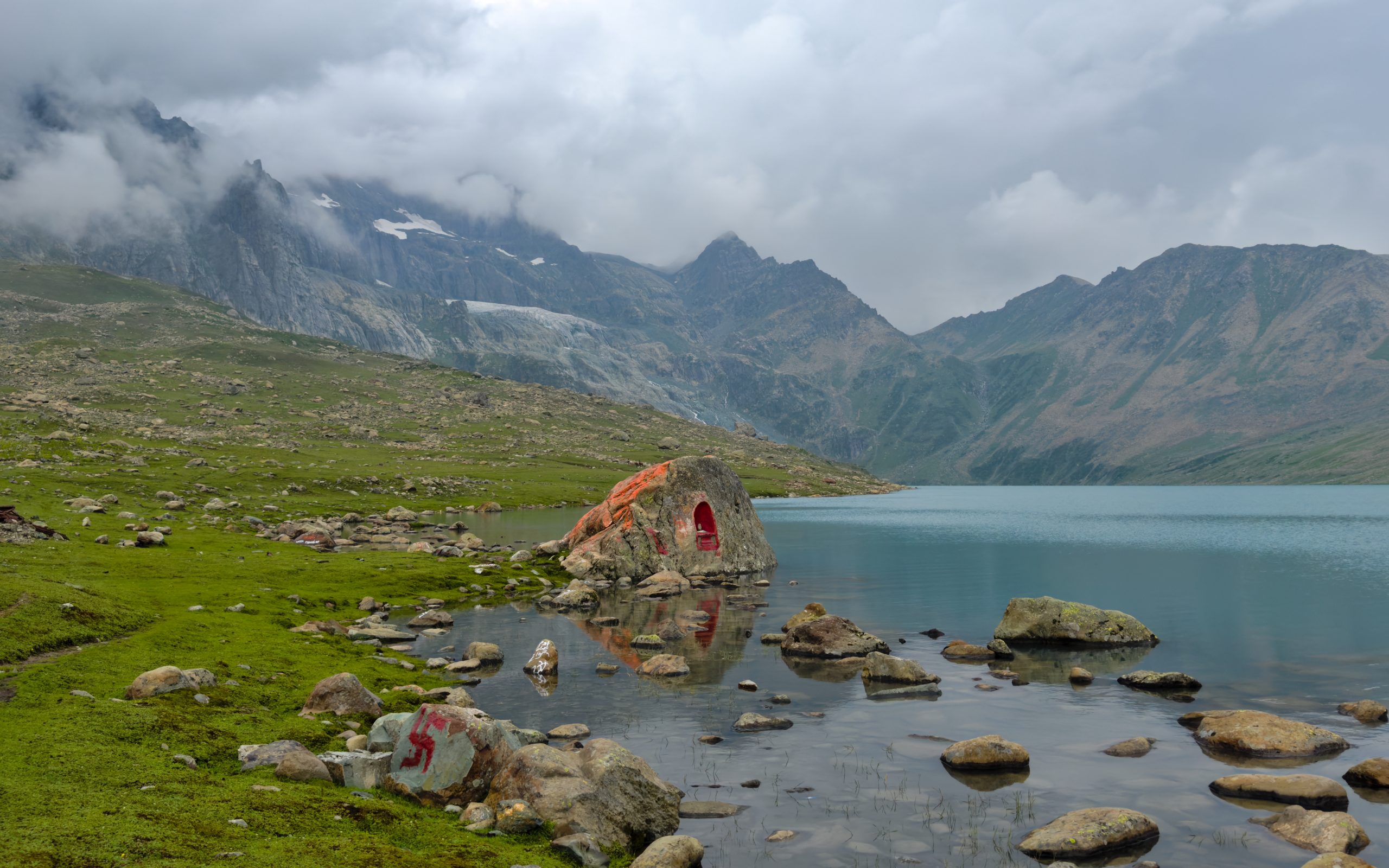
Similarly, Sanjeev Bhuchar, who works on reviving springs in the HKH at the International Centre for Integrated Mountain Development (ICIMOD), says that there are 3 million springs in the India Himalayas. But nearly half of the region’s perennial springs have become seasonal or simply disappeared.
Once again, the causes for this are many, including an increase in tourism and the local population. An outcome of springs drying up has been the shrinking of women’s independence in rural mountain communities. Women and girls now have to walk farther to fetch water, which disrupts the former’s income and the latter’s education.
All is not lost, however. Bhuchar lays out ICIMOD’s six-step protocol to revive springs, which, he says, has brought a spring back to life in Moldhar village in Tehri Garhwal district, Uttarakhand. There is still hope, he suggests.
In another essay, Kathmandu-based Arun B. Shrestha, who works with ICIMOD on reducing climate and environmental risks, states that the HKH’s cryosphere (that is, glaciers, snow cover and permafrost) should matter to everyone. Why? Because it regulates river runoff, replenishes groundwater, and helps sustain people and agriculture, among other functions.
Global warming, though, has caused reduced snowfall, freshwater shortages and an increased risk of Glacial Lake Outburst Floods (GLOFs). Since GLOFs can lead to transboundary disasters, Shrestha recommends that the governments of HKH countries work on early warning systems and climate adaptation plans – together.
THE COSTS OF HYDROPOWER AND INDUSTRY
̇When it comes to government, the essays on rivers don’t hold back. They see the state’s damming of rivers, river-linking and hydropower projects for what they are: activities that come with huge human and environmental costs.
Journalist Varsha Singh provides a detailed account of Lohari village’s battle against the 120-megawatt Vyasi hydropower project in Dehradun district. Despite the displaced villagers’ protests and their rehabilitation demands (land in exchange for land, not financial compensation), the district administration went ahead with damming the Yamuna, which submerged their homes and farms.
There are more than 100 big and small hydropower projects in Uttarakhand, journalist Hridayesh Joshi tells us in his essay. We can only imagine the scale of devastation and displacement they will cause.
While Joshi narrates sombre water tales, he shares a happy story, too, of a village in Pithoragarh district, Uttarakhand. In the face of water scarcity, villagers and scientists came together, built forest trenches to store water, and planted trees that increased soil moisture. All of this eventually rejuvenated the local springs. Citing similar cases from Rajasthan, he concludes that community action with some support from the administration can have positive results.
Other contributors are not so optimistic. In his piece on industrial pollution of water, scientist Anjan Ray says that the plethora of government agencies responsible for ensuring that industrial wastewater is treated before it is discharged are both unaccountable and ineffective. How will a citizen or an industrialist know which agency to approach in order to solve his/her water woes, he asks. The system is too complex and ambiguous, he maintains.
Still, finger-pointing at industry or government isn’t exactly productive, Ray says. We must look at our own consumption patterns, particularly as city dwellers, he insists, and remember that every time we buy something, we’re utilising an excessive amount of water. For instance, 150,000 litres of water are used to make one passenger vehicle in India – and that can satisfy the daily water needs of 300 families!
TOWARDS SOLUTIONS: FOR WATER, AGRICULTURE AND PEOPLE
With swathes of the country experiencing water stress, farm incomes have wilted, spurring rural-to-urban migration. The essay by journalist and The Migration Story co-founder, Roli Srivastava, features some stories of the more than 250 million Indians dependent on agriculture, who are forced to migrate in distress due to water scarcity and an erratic climate. They end up in risky, exploitative jobs, sometimes even debt bondage.
But shoots of hope have sprouted, she says. Srivastava shares stories from Odisha’s Kendujhar district, where women (often ‘left behind’ in villages when men migrate) have given up cultivating water-intensive paddy on their family farms and turned to drought-resistant millets instead. Or the villagers of Biliya panchayat in Shahpura district, Rajasthan, many of whom returned from the city because those who stayed behind built a wall to conserve water for farming and prevent rainwater runoff. These stories may seem like exceptions, but they show us that working collectively to safeguard water can lead to effective local solutions.
In fact, decentralised water management in India is cited globally for its effectiveness, as environmentalist Sunita Narain’s essay reminds us. “We can be water-secure if we are water-wise,” she writes. But Narain doesn’t speak only of water conservation that can build drought resilience in rural areas; she says that it’s as important to do this in city lakes and ponds before rainwater becomes an urban flood. And that there are now solutions to recycle wastewater so it can be reused. What’s awaited is implementation.
This is not to say that our water policy, or for that matter, our policies on development are getting it right. “We are oblivious of the need for climate-resilient development,” Narain says, adding that we are simply unable to ensure that development is “ecologically appropriate and socially inclusive”.
She narrates how, as a member of a high-level government committee for hydropower projects in Uttarakhand in 2013, she had argued for the Ganga not to be diverted. The engineers, who had planned 70-odd projects, wanted to retrain 80% of the river and its tributaries. In the end, her suggestions were relegated to a dissent note in the committee’s final report, and the government went ahead with the projects, irrespective of the climate disasters the mountainous state had witnessed.
Climate change has also made the Indian monsoon more erratic, upsetting farmers’ cultivation rhythms in northern and peninsular India. This comes up in Suman Sahai’s essay on adapting rain-fed agriculture to diminishing water, which her nonprofit organisation, Gene Campaign, has worked on in Uttarakhand’s Kumaon region.
They have built jal kunds or rainwater storage tanks along with communities, which have, till date, conserved 34.3 million litres of water. They have also helped revive millet cultivation using traditional and lab-bred varieties because greater genetic variety is an insurance against crop collapse due to climate change. Plus, given that water availability in the future is likely to be uncertain, they have shared with farmers techniques to grow crops with less water.
CHANGING MONSOONS, WETLANDS AND OCEANS
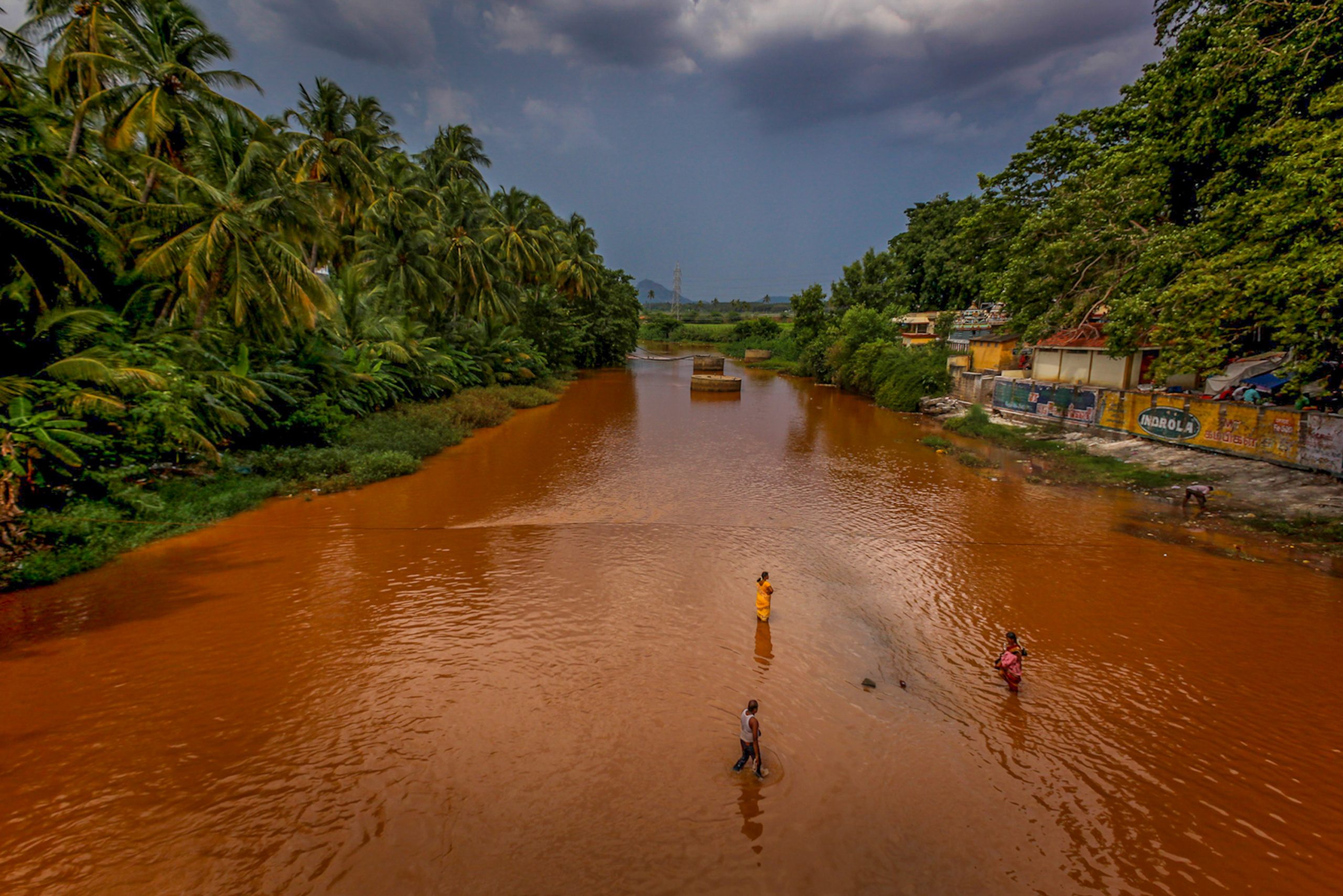
You might be tempted to ask: What do we mean when we say that the Indian monsoon has become erratic? Climate scientist Roxy Koll provides some answers in his essay. The monsoon has been changing since the 1950s – prolonged dry spells now alternate with extreme rainfall. Overall, rainfall over the north and the Western Ghats has reduced between 1950 and 2024, but there has been a three-fold increase in extreme rainfall events over the core monsoon regions.
This has had a whole host of impacts – on land, water and people. What’s fascinating, though, is Koll’s discussion of recent research on the National River Linking Project and how it could affect the monsoon. The NPP, as it’s called, plans to connect major Indian rivers by building a 15,000-kilometre network of canals and 3,000 reservoirs.
But the research shows that the river-linking could increase September rainfall by up to 10% in the Ganga, Godavari and Krishna basins, while reducing rainfall by up to 12% in arid zones in Madhya Pradesh, Odisha, Chhattisgarh, Uttarakhand, Rajasthan and Gujarat. This does not bode well for a water-secure future, particularly in an era of climate extremes.
Neither does the disappearance of wetlands, which is three times faster than that of forests today. We’ve lost 64% of the world’s wetlands since 1900, says development ecologist Somnath Bandopadhyay in his essay on wetland conservation.
He writes about how the East Kolkata Wetlands (EKW) treated 78% of the city’s sewage naturally in the 1990s, saving the municipality 4,700 million rupees annually in treatment costs. But encroachments and industrial dumping have made the EKW shrink from 12,500 hectares to around 8,000 hectares, even though they were declared a Ramsar Site, which mandates protection at a global level. Sadly, wetland destruction has been seen in many Indian cities.
Finally, what ails the seas today? Purnima Jalihal, a senior scientist at the National Institute of Ocean Technology (NIOT), says that it is primarily pollution and climate change. Jalihal, who has developed devices to create renewable ocean energy, asks if, instead of mining the ocean floor for oil and gas, we can create energy from waves, tides, marine currents and offshore wind. The NIOT, she adds, is trying to use green energy to run desalination plants in the Lakshwadeep islands, but such solutions still need to be scaled up.
A PHILOSOPHY OF WATER
Whether water is on land, in the sea or the air, what informs the way we engage with it? The book’s concluding essays ask that we ponder on this a while.
Mridula Ramesh, an author and cleantech angel investor, says that ancient political strategist Chanakya (350–275 BCE) was smart because he recommended a water tax – one that ensured that the rich who consumed more water would pay more taxes.
She contrasts this with the Mumbai municipality, which spends 19.44 rupees per kilometre to source, transport, treat and distribute water from reservoirs outside the city to urban households. However, it charges urban, ‘non-slum’ households (who use up to 750 litres a day) only 5.22 rupees per kilometre for this water. Given the urban-rural water inequity, this water tariff, for Ramesh, feels inadequate.
Minni Jain and Philip Franses, who work on catchment rejuvenation through their NGO, The Flow Partnership, says that quantitative measurements have become “the end game… their importance has superseded the cosmic understanding of water’s role in life”.
What might a cosmic understanding of water look like? Butalia, in her own essay, tries to answer this question. She dives deep into the world’s religions to look for the many spiritual meanings of water.
In fact, she borrows the book’s title – Living Waters – from Christianity. Jesus, she writes, was the giver of ‘living water’ as per the Gospel of John. Living water was a metaphor for God’s life-giving presence, which offers spiritual renewal and eternal life, not just physical sustenance. Its use, here, in the title is a symbolic reminder of water’s ability to sustain all life.
In many creation myths, Butalia points out, creation itself begins in the ocean. Conservation, too, she suggests, could begin with our collective love for water, whether secular or religious. In essence, she says that a “deep spiritual bankruptcy” plagues the human race, forcing us to disassociate with nature and focus on our selfish, individualistic needs, ensnared in maya.
We need to revive the memory of water in our bodies and our consciousness, she exhorts the reader, and find the respect we once had for it to heal the Earth and ourselves.
WHAT WE CAN DO ABOUT THE WATER CRISIS
So, where do we go from here? Interestingly, two of the book’s essays have concrete suggestions that could help readers reconnect, philosophically speaking, with water and take local actions to adapt to the changing climate.
Alpha Lo, an American podcaster who teaches about water in permaculture, writes of the need for a slow water anthem. He argues for a shift in our approach to water that requires slowing it down (so we can have more of it on land) and not fast-tracking it off our continents and into the oceans. This approach, albeit rooted in science, asks us to make a philosophical shift and consider how we think about water.
Ali Bin Shahid, an Islamabad-based systems architect, helps us see that “we are not passive victims of weather patterns… [but] active participants in a dance between land and sky”. In easy-to-understand language, he explains the science behind rainfall and shows us how we can create rainfall on a small parcel of land without spending too much, and influence the micro-climate within a single growing season.
Resilience to the changing climate, then, is something we could build ourselves without waiting for it to be delivered by external systems. This hands-on approach informs a majority of the essays, which feature specific calls to action as well.
The book, a reservoir of facts and insights, offers concrete solutions from its contributors, who are working on the ground, on the cutting edge of climate research, or participating in policy discussions with the government. A number of the contributors are either from Uttarakhand or working there and therefore, writing about it, but that’s hardly a criticism. If anything, we learn about the particularly vulnerable condition of the state, and the Hindu Kush Himalaya more generally, from a variety of perspectives.
Certain parts of the country may not be represented in the book, but one anthology can only do so much. Besides, topics such as water and climate change are highly complex and multi-layered, and each region deserves its own anthology.
Importantly, the book takes a step back from global climate discussions and encourages us, as readers, to slow down with it. As we do this, perhaps we can begin to focus on our local waters and local climates.
We also end up thinking about how we’re thinking about water when we read the delightful quotes sprinkled across the book. Consider this one, which feels like a glass of cool water on a hot summer day:
“Water is life’s matter and matrix, mother and medium. There is no life without water.”
– Albert Szent-Gyorgyi, Nobel Prize-winning Hungarian biochemist
(Living Waters: Pulse of the Planet (2025), edited by Romola Butalia, has been published by Motilal Banarasidass Publishing House, New Delhi.)
Subuhi Jiwani is an independent journalist, editor and researcher based in Mumbai. Some of her work can be found here: https://linktr.ee/subuhijiwani