
Beyond the grandeur: Migrant workers’ struggles in the shadow of India Gate
- Sujit Kumar Mishra
- 6 days ago
- 5 min read
While all eyes are on the iconic monument every Republic Day, its environs are also a migrant magnet, providing livelihood to thousands who pour into Delhi from adjacent villages and nearby states

Sujit Kumar Mishra

Pic courtesy: Tanmoy Bhaduri
Raj Deb, a 48-year-old live portrait artist from Jharkhand, migrated to Delhi in 2009 in search of a livelihood. Painting had always been his passion. Initially, he worked as a painter in a company for 24,000 rupees per month, but the tiring commute to different places left him with barely any time for self and family.
A chance visit to Qutab Minar introduced Deb to the concept of drawing live portraits. To better exercise his own discretion in his work, he chose to shift from his regular job to being a portrait painter, working daily from 5.30 pm to 10 pm in the vicinity of Delhi’s historic India Gate.
This Edwin Lutyen-designed war memorial, commemorating the soldiers that died in World War 1, is in prime focus every January 26 when the majestic Republic Day parade passes it en route to Red Fort. But apart from the grandeur of its Indo-Saracenic architecture and the patriotism that it arouses, India Gate has another identity: that of a migrant magnet, a place that beckons the likes of Deb.
The portrait painter settled down into his new profession, making a decent livelihood from it. “The weekends and public holidays are peak earning time for me,” he told me. “On such days, I make 1,500 to 2,000 rupees, otherwise it is 800 to 1,000 rupees daily.” After deducting 3,000 rupees for travel, living as he does 25 km away from India Gate, the portrait painter’s monthly earnings stand at 25,000 rupees.
Delhi, unlike most other Indian cities, is unique on account of the socio-historical factors that shape its geography. Thousands of Indian and global tourists as well as locals on day outings flock to India Gate, Qutub Minar, Humayun’s Tomb, Red Fort and other iconic monuments—and these provide livelihood opportunities to thousands of people, both locals and migrants. From auto drivers and photographers to live portrait artists and hawkers selling food, water and mementoes, the tourist spots sustain a thriving market of independent livelihood earners and help the working class survive.
The substantial number of migrants among these come from the adjacent villages of Delhi or North Indian states such as Uttar Pradesh, Bihar, Jharkhand and Haryana. Social capital acts as an important push factor in this migrant movement to the capital city—many people have relatives, friends or co-villagers who migrated to Delhi earlier in pursuit of livelihood opportunities and can become a temporary support system.
Once, while getting into an auto at India Gate, the Delhi-based auto driver asked me, “Kothae jaben?” (Where would you like to go?)” Hearing him speak Bengali, clearly not his mother tongue, surprised me. On enquiry, I learnt that most of the auto drivers there possessed a working knowledge of almost all the major Indian languages. They could even speak a smidgen of English with foreign tourists. Keeping the needs of visitors in mind, they had adapted seamlessly, and this made me keen to further interact with them.
Another significant conversation took place with a 20-year-old golgappa seller from Aligarh in Uttar Pradesh. The migrant worker came from a household where every member earned their livelihood from this profession. On an average, he would earn 300 rupees per day if he stood at India Gate till the wee hours of the morning. I asked him about his savings and he said he had none—whatever he earned was sent home to his parents and wife. After working for around 20 days, he would return to his native place to rest for a few days, resuming work only when he felt better.
I also met a group of photographers, aged 22 to 40 years, who lived in settlements close to India Gate. They were all migrants from nearby villages and nearby states. While each one had a different story, they all had one thing in common: they were not the owners of the camera and printers they used in their work. All of them were employed by someone who provided the equipment and to whom they had to shell out a share of the day’s earnings. Given the risk factor in handling unfamiliar material, the inexperienced ones got less money than the veterans; in sum, the cut from their earnings going to the ‘employers’ ranged between 40% and 60%.
But though this motley crowd of small entrepreneurs chooses to work at India Gate, it is not easy. They are often victims of harassment and made to fork out up to 1,000 rupees as a bribe to ply their trade. The situation is worse during peak working hours. For instance, the portrait artists, who earn around 200 to 300 rupees on an average for each painting, are often targeted by hafta or extortion gangs who seize their instruments. This leads to a lapse in concentration, and the artists’ consequent failure to capture their clients’ face with exactitude often results in clients refusing to accept the portrait.
After interacting with over 150 such livelihood earners, what became clear was that none of them was interested in leaving the India Gate street market despite its drawbacks. The reason was not far to seek.
Quitting involves many socio-economic risks, both known and unknown. For a known shock, for instance personal exigencies, the market itself acts as an institution to take care of its members—in other words, co-livelihood earners with established social and economic links provide mutual support to solve the issues to a certain extent. In contrast, unknown adverse situations such as the COVID-19 pandemic differ fundamentally in nature and dismantle these informal support systems. The only alternative left in this case is for people to rethink their profession.
Rethinking a profession can be sudden or gradual. Sudden rethinking is, as evident, a spur-of-the-moment response to an external shock, leading to the immediate loss of livelihood. This is a decision over which the livelihood earners have no control. In gradual rethinking, the affected person has enough time and resources to deal with the losses, and works towards finding a sustainable alternative, thereby minimising costs to the maximum extent possible. This is an ideal situation, in which no compromise is called for.
Most of the livelihood earners at India Gate, however, are victims of the first scenario. Their earning is time-specific and dependent on the number of visitors to India Gate. In order to survive, some of these vendors must overcome several challenges. At the very least, they have to overcome negative externalities like sleep deprivation, as they start plying their trade by 5.30 pm and remain there until 5.30 am the next morning, which takes a toll on their health.
Here, a relevant question arises: Who can rethink one’s profession? The livelihood earners at India Gate emphasised that for them it was unfeasible since the opportunity costs associated with the period of transitional unemployment were substantial, thereby compelling them to remain in the market. Their answer was very clear: “This is our life and livelihood. We never thought that we could or should do any other work other than what we do.”
Individuals engaged in a specific livelihood activity often constitute a minority group due to their expertise in only that area. Consequently, their involvement in the labour market is intricate and, in several respects, distinct from that of the general population. Their limited skill set hinders their ability to enter a new field and earn decent wages in an already saturated labour market.
I asked the livelihood earners of India Gate individually whether they were satisfied with their profession. Their reply: “We have no choice but to be happy since we're not qualified for any other job.”
Edited by Radha Rajadhyaksh
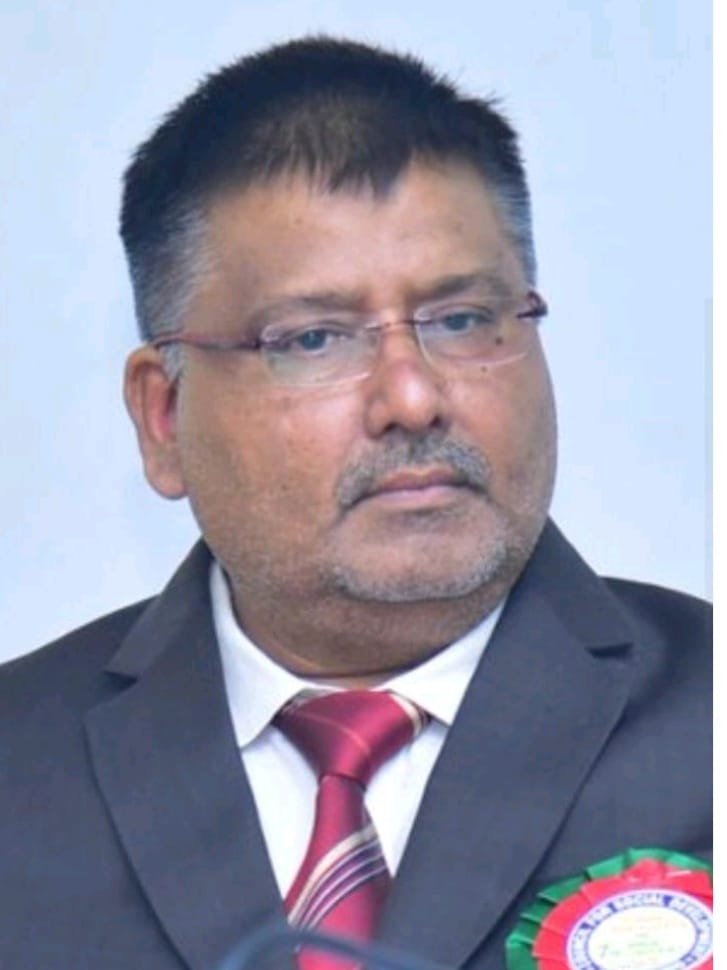
Sujit Kumr Mishra is a professor and regional director of the Council for Social Development, an autonomous research institute funded by ICSSR, the Government of Telangana and the Reserve Bank of India.


Comments