ALANG, Gujarat: On the western shore of the Gulf of Khambat, Radhey Kumar measures his days by how slowly they pass. By late morning, he sits near the ship-recycling yard with nothing to do, just watching the hours stretch. At 56, after decades of dismantling cargo vessels and oil tankers, his body has borne the brunt of the work: he has chronic back pain and stiff joints. But it is the absence of work that has begun to define his life now.
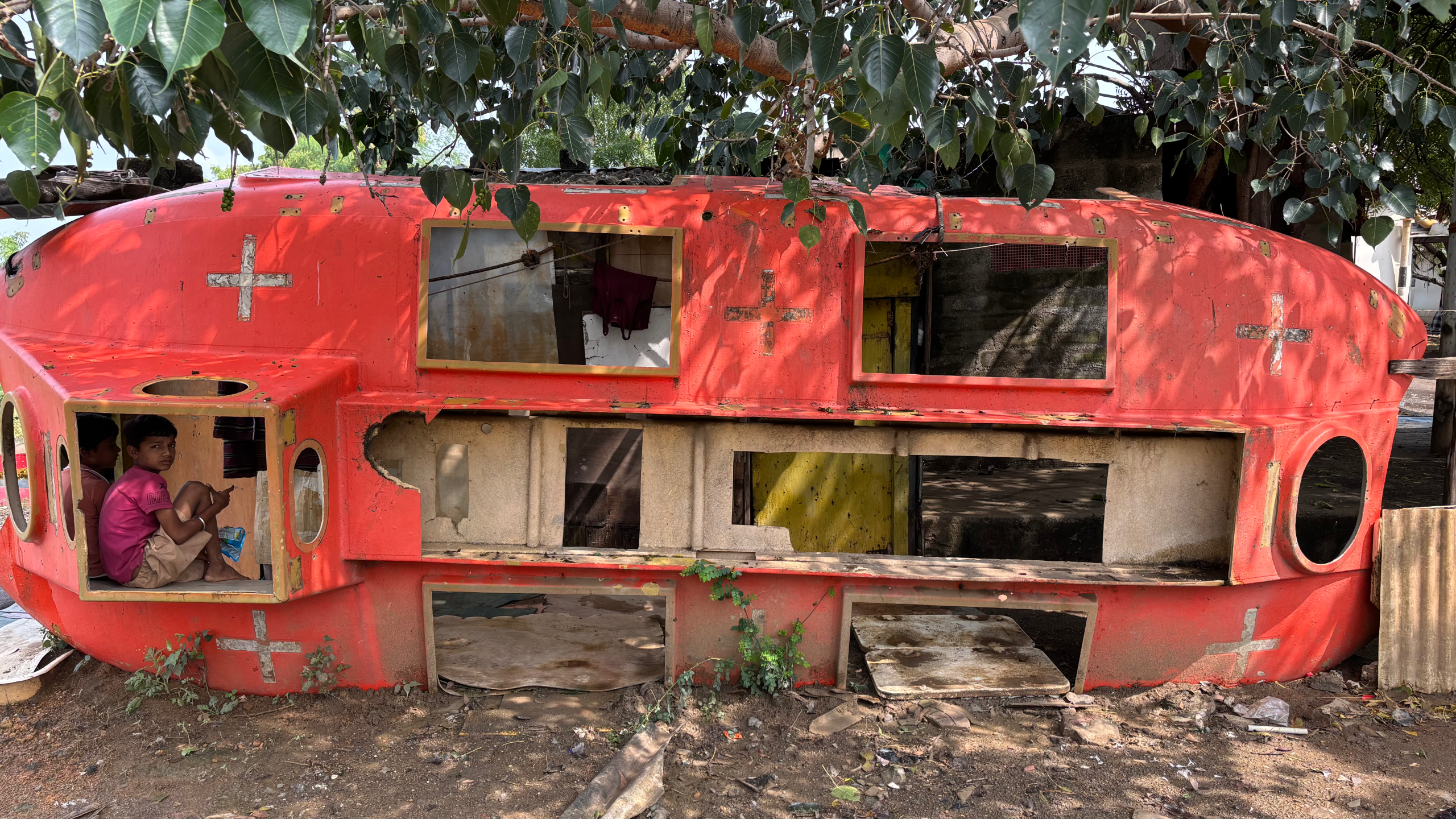
“Earlier, the yard was so full of ships you had to look twice to see the sea,” recalled Kumar, who migrated to Alang in 1995 from Uttar Pradesh to work at the ship-breaking yard. “There were days we barely sat down.” Today, this 10-kilometre-long stretch of coast mostly lies quiet, punctured only by the sound of the sea.
Since 1983, privately owned yards near the villages of Alang and Sosiya have taken apart, piece by piece, ships decommissioned from global shipping routes. Over the years, the volume and regularity of vessels arriving from Europe, Japan, Greece and Singapore reshaped the local economy and labour market, drawing workers from across India to what became one of the world’s largest ship-recycling zones.
However, since 2011-12, ship-breaking at Alang has slipped into an uncertain rhythm. The forces reshaping global shipping—trade disruptions from the Ukraine war, ships diverting away from the Suez Canal amid Red Sea attacks linked to Israel’s war on Palestine, tightening margins, and the rising costs of environmental and safety compliance—have collectively squeezed the flow of vessels to the shipbreaking yards. Ship arrivals here were no longer regular or predictable; work picked up briefly and then dropped off. As a result, the livelihoods of thousands of migrant workers like Kumar became uncertain. They ended up waiting for work, then returning to their villages, then coming back again when a ship arrived.
BOATS AS TALL AS BUILDINGS
When Kumar first came to Alang from Kanta village in Gorakhpur district, migration had felt inevitable. “By the time we had grown up, it had almost become a ritual for people from our village to move to big cities, especially those without land,” he said. “I wasn’t doing much at home, and when my friends decided to go, I followed them here.”
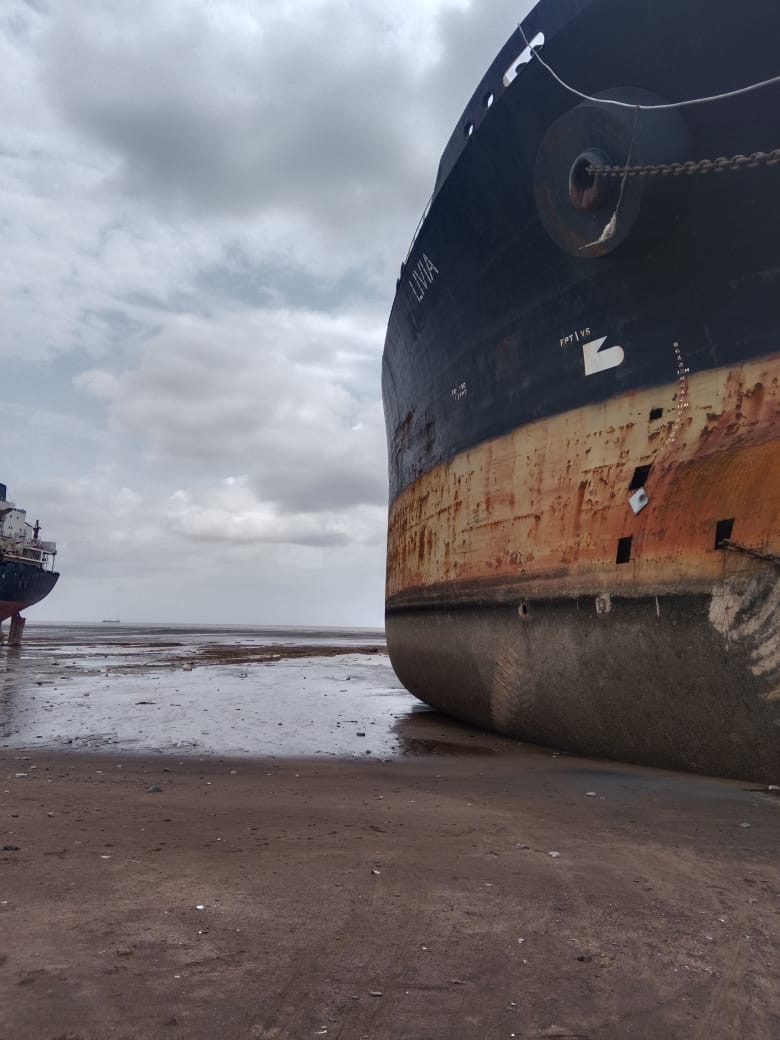
But he had no idea about the work waiting for him in Alang – and what he encountered was like nothing he had known before. “I saw ships as huge as buildings and before that, I had only seen [smaller] boats,” Kumar said. “The only building I had seen that came close was the Taj Mahal – I went there after my wedding – but these ships were even bigger.” The landscape, the silence, and especially the sound of the sea also felt unfamiliar to him.
In the early years, the loneliness Kumar felt being away from home was lessened by the companionship of friends from his village and the assurance of steady work. “There were always friends around to share a room with,” he said. With a regular income from the yard, he was able to send money back home. “I remember sending 400 rupees a month. It felt huge at the time,” he added, his eyes lighting up. His family got him married soon after, and in 1997, his wife, Dulhaniya, joined him in Alang.
For migrants, this gradual transition, from being single men who arrived alone to being workers who settled down with families, reshaped the social fabric of the area, said Vidyadhar Rane, president of the Alang-Sosiya Ship Recycling and General Workers’ Association (ASSRGWA). Since 2011-12, however, when fewer ships started to arrive at Alang, the workers’ settlements began to thin out, and the workforce shrank to a fourth of its size, from 60,000 to around 16,500.
THE COSTS OF COMPLIANCE
South Asia shoulders a disproportionate share of global ship-dismantling, with Alang, Bangladesh’s Chittagong yards and Pakistan’s Gadani coast absorbing many of the world’s hazardous end-of-life vessels. When ship-breaking began in Alang in the early 1980s, the place was a quiet fishing village. The main yard became operational in 1983, and within a few years, the coast was carved up into ship-breaking plots.
This activity, which also spread to Sosiya village, drew migrants from across the country. Many came from eastern Uttar Pradesh districts such as Gorakhpur, Deoria, Kushinagar, Maharajganj, Basti and Siddharthnagar; Jharkhand’s Chatra, Hazaribagh and Palamu districts; Bihar’s Gaya, Patna and Kaimur districts; West Bengal’s Birbhum district; and Odisha’s Ganjam district. Some came from within Gujarat too, drawn by the boom that the yards promised. Alang eventually grew into a small coastal town.
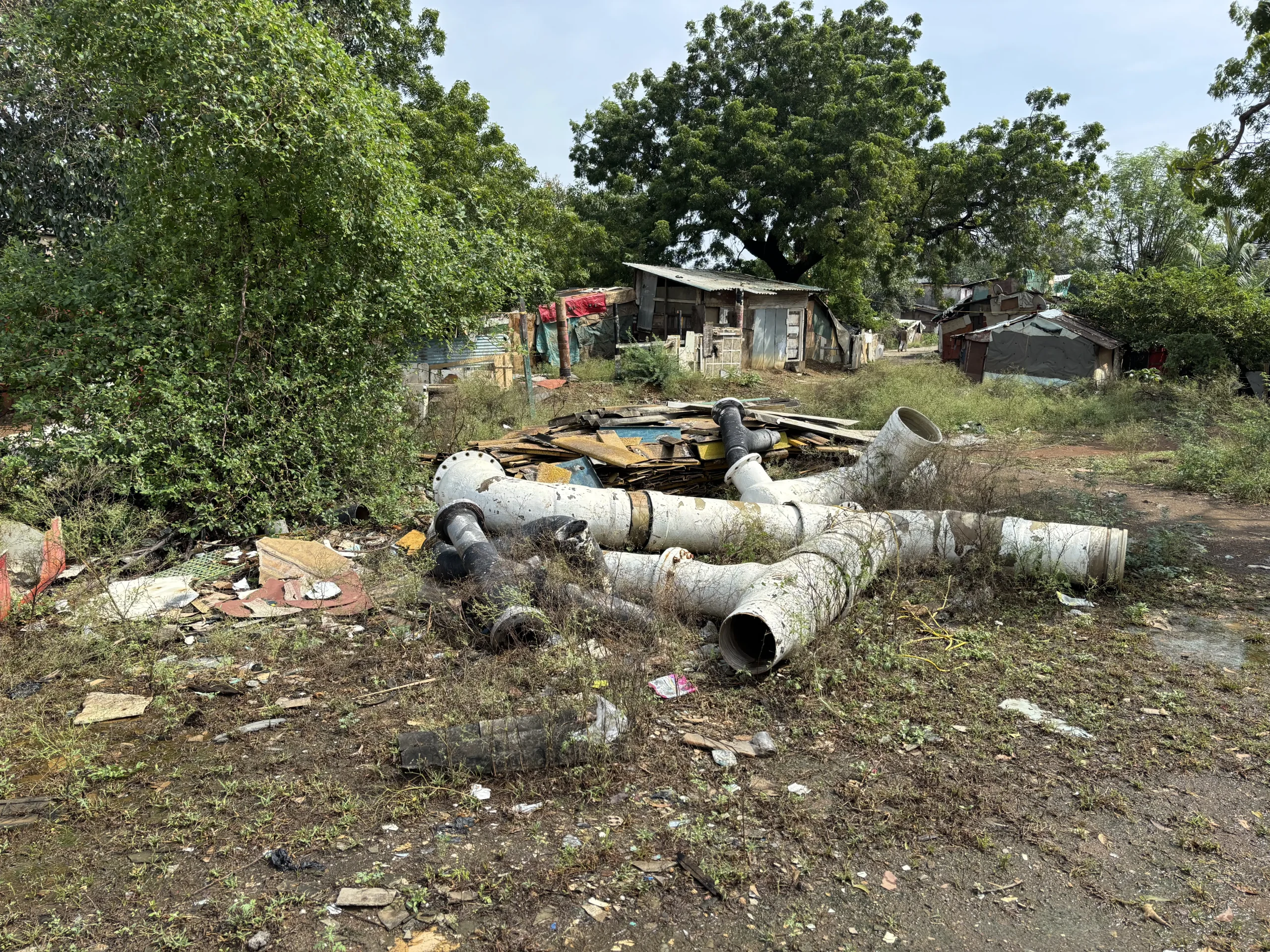
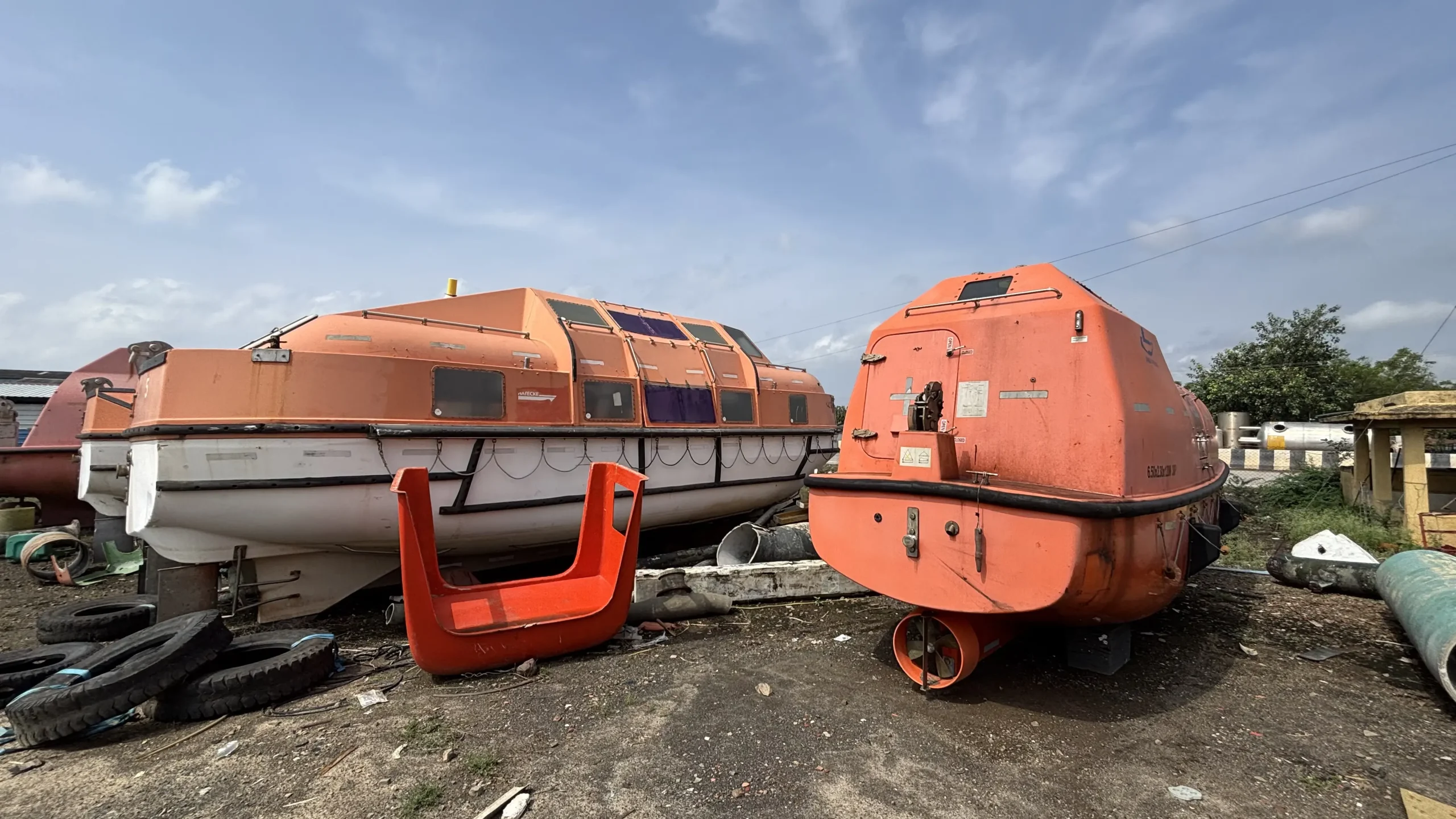
However, ship-breaking, here, has witnessed a slowdown over the last decade. According to the India Ship Recycling Industries Association, the number of vessels dismantled at Alang fell by nearly 70 % between 2011 and 2024, from 415 to 101. Large stretches of the Alang–Sosiya Ship-Recycling Yard now lie quiet as do the labourers’ settlements. And many migrants moved back to their villages because of the uncertainty of employment.
In 2019, India ratified the Hong Kong International Convention for the Safe and Environmentally Sound Recycling of Ships (HKC) and passed the Recycling of Ships Act, 2019, both of which fundamentally altered how ship recycling operates along this coast.
Yards at Alang now had to comply with the pollution-control measures and ensure that workers were trained in safety protocols. Ship-breaking is one of the most dangerous jobs in the world, according to the International Labour Organisation.
This compliance increased the yards’ operational costs, however. As a result, Alang was at a disadvantage in regional markets. These pressures were compounded by disruptions in global shipping, including fewer ships being decommissioned since the Covid-19 pandemic and global geo-political tensions.
Additionally, under the Recycling of Ships Act, 2019, workers were required to complete a safety training before they could work on the ship-breaking plots – and yard owners are responsible for this aspect of the compliance. The training covered safety practices (such as wearing PPEs, learning fire-fighting basics and preventing falls from heights) as well as identifying toxic fumes and hazardous sections of ships, especially areas that can release toxic gases and can prove deadly.
FEAR AND FATALITIES AT WORK
Sumukha Dev, 29, a migrant worker from Odisha’s Ganjam district, had to undergo this training before he started work on the yards. He arrived in Alang only five months ago and was working as a labourer in a Surat textile mill before that. One day, a friend of his, also a seasonal worker, got a call from an Alang yard owner saying that a ship had arrived on the coast. “My friend was asked to bring a few more people with him to work in Alang, and that’s how I came,” Dev told The Migration Story.
Like many first-time workers, the scale of the ships unsettled him at first. “I knew they would be huge, and I was told we would break them apart piece by piece,” he said. “But when you stand in front of them, a human feels almost invisible. I was more scared than amazed, thinking about how we, workers, would break something so massive.”
But that fear eased during the safety training, and on completing the programme, Dev received a certificate required to work in Alang’s ship-breaking yards. According to ASSRGWA (the workers’ union), these trainings have not only built confidence among new entrants but also significantly reduced fatalities.
In fact, a 2014 study, supported by the National Human Rights Commission, showed that at least 470 fatal accidents had occurred at the Alang yards from the time of their inception in 1983 to 2013. Radhey remembers an Alang when deaths were once routine. “This is no exaggeration,” he said. “Almost every other day, while working at the yards, we would hear that someone had fallen or someone had inhaled poisonous gas and died. Death was very common. Sometimes, I wonder how I survived for so long.”
The risks of ship-breaking were so widely acknowledged that a new saying emerged in Gujarat: “Alang se palang tak”, literally, “From Alang to the bed.” The phrase was often used to describe how work in the yards was once associated with illness and early death.
But it also revealed an underlying fear, which was not unfounded. A study by the National Institute of Occupational Health found extensive asbestos use in ships, including in insulation, cables, adhesives, gaskets and so on. It stated that of 94 workers exposed to asbestos in 2006-07, 15 showed abnormalities in their chest X-rays, while 26 had restrictive lung impairment.
Although compliance regulations have made work in Alang safer, for some workers, the absence of work weighs heavy. Ramakant, 47, who arrived in Alang twelve years ago, said, “There was a strange kind of power in this work. You would watch something as tall as a skyscraper slowly disappear into dust and nothingness.” However, the uncertainty of work has made him wonder about the point of the safety training.
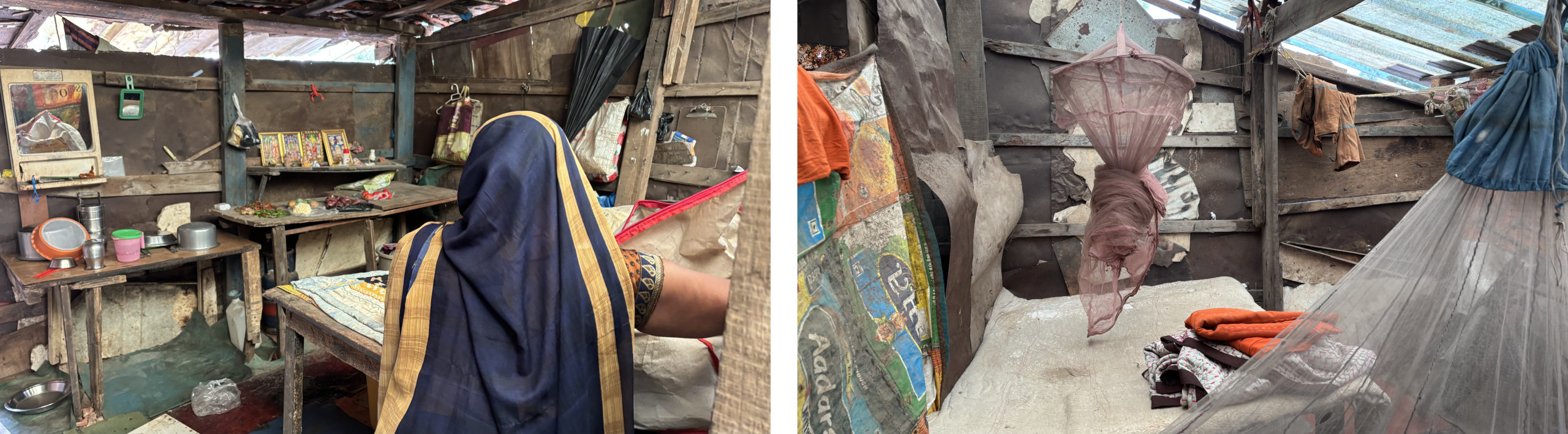
For Kumar’s wife, Dulhaniya Devi, who is in her mid-fifties, life moves at an unhurried rhythm. She cooks for herself and her husband, chats with the two women who still live in her lane, and walks with them along the Arabian Sea each evening. “Earlier, there were many families here,” she said. “Now only a few remain. Most have gone back home [to their villages] or moved to other cities where there is work.”
Their son, Sanjay, also tried his luck at the ship-breaking yards when his father’s back pain worsened, and the family needed an additional income. But as the work in Alang petered out, he went to Surat, whose vast textile industry absorbs migrant labour when Alang cannot.
Workers now circulate between cities, and Ramakant’s trajectory, too, mirrors this drift. He works at an industrial unit in Surat and returns to Alang only when a ship is expected. Even though ship-breaking here is intermittent, it pays slightly more than work in Surat – and if a ship needs dismantling, that work can last for three to six months at a stretch.
According to Chetan Patel, who owns a yard in Alang, labour is mobilised only after he secures a bid for a vessel and it is expected on the coast. Depending on its size and complexity, a single vessel can take several months to dismantle, sometimes more than a year, and may require between 100 and 400 workers. “Labour works in a chain,” Patel explained. “Even if we call a few people, through word of mouth, many turn up, and the work gets done.”
Even though most workers move in and out of Alang, Kumar and Dulhaniya have stayed put. Over the years, Dulhaniya has developed an unexpected sense of belonging to the town. “Earlier, we used to return to our village in Gorakhpur every year,” she said. “Now I feel at peace only here.”
Kumar is still willing to work, despite his chronic back pain, but with jobs being scarce, the yards tend to prefer younger workers. So, the couple mostly sustains itself on the income their son sends home from Surat.
The workers who migrated to Alang in large numbers, Dulhaniya added, have helped develop the place too. “Earlier, there was no hospital here. We had to travel all the way to Bhavnagar for treatment.” But today, Alang has its own public hospital. “Going there helps my knees and his [Kumar’s] back. That is enough for us to stay,” she said, smiling.
Over time, the pull of their village in U.P.’s Gorakhpur faded. “We used to go often…every other year. It’s now been three years since we went back. We don’t miss the village anymore; this is our home now,” she concluded.
Edited by Subuhi Jiwani
Anuj Behal is a freelance journalist and urban researcher based in India. His work explores the intersections of urban injustice, diaspora migration, and climate change.