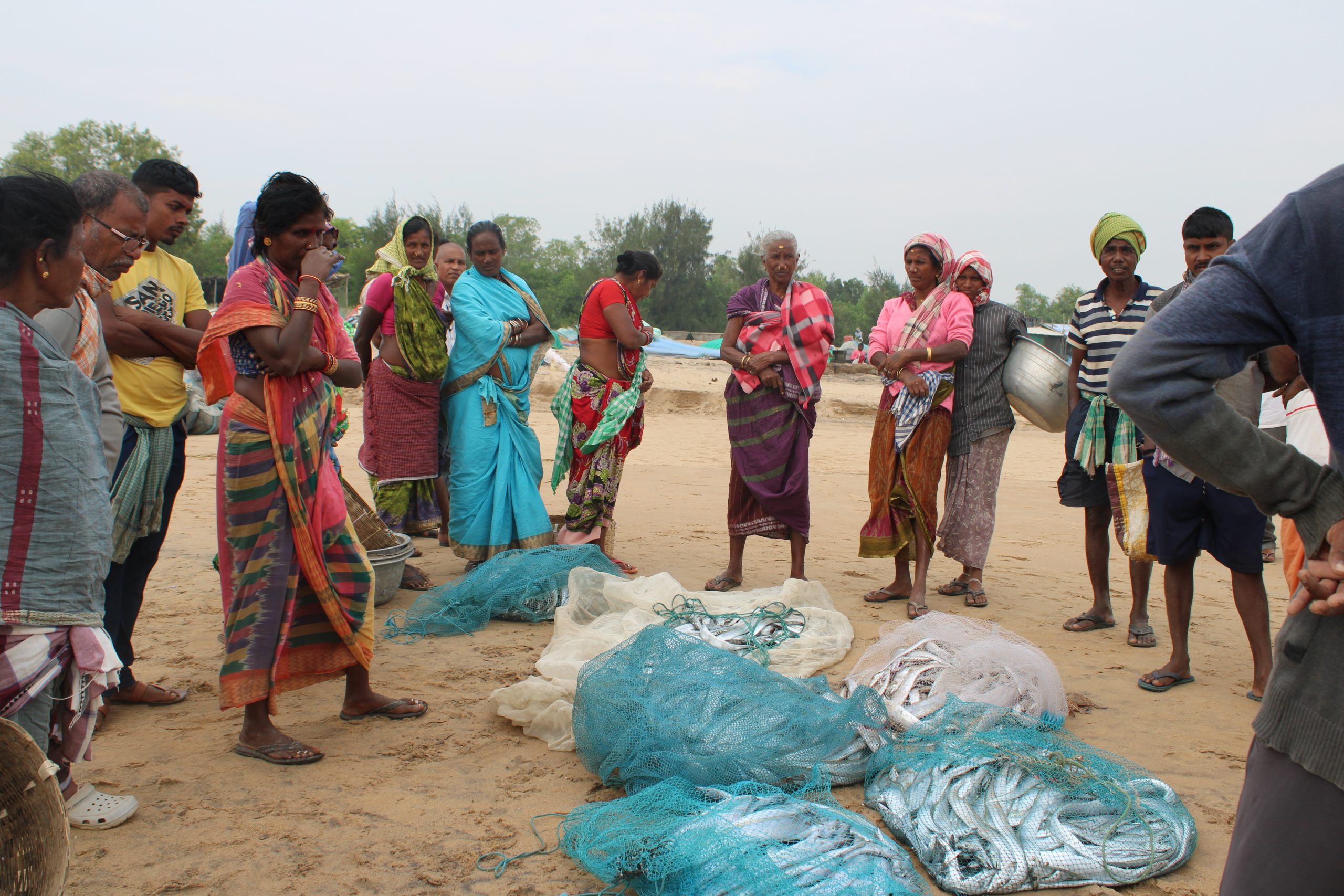
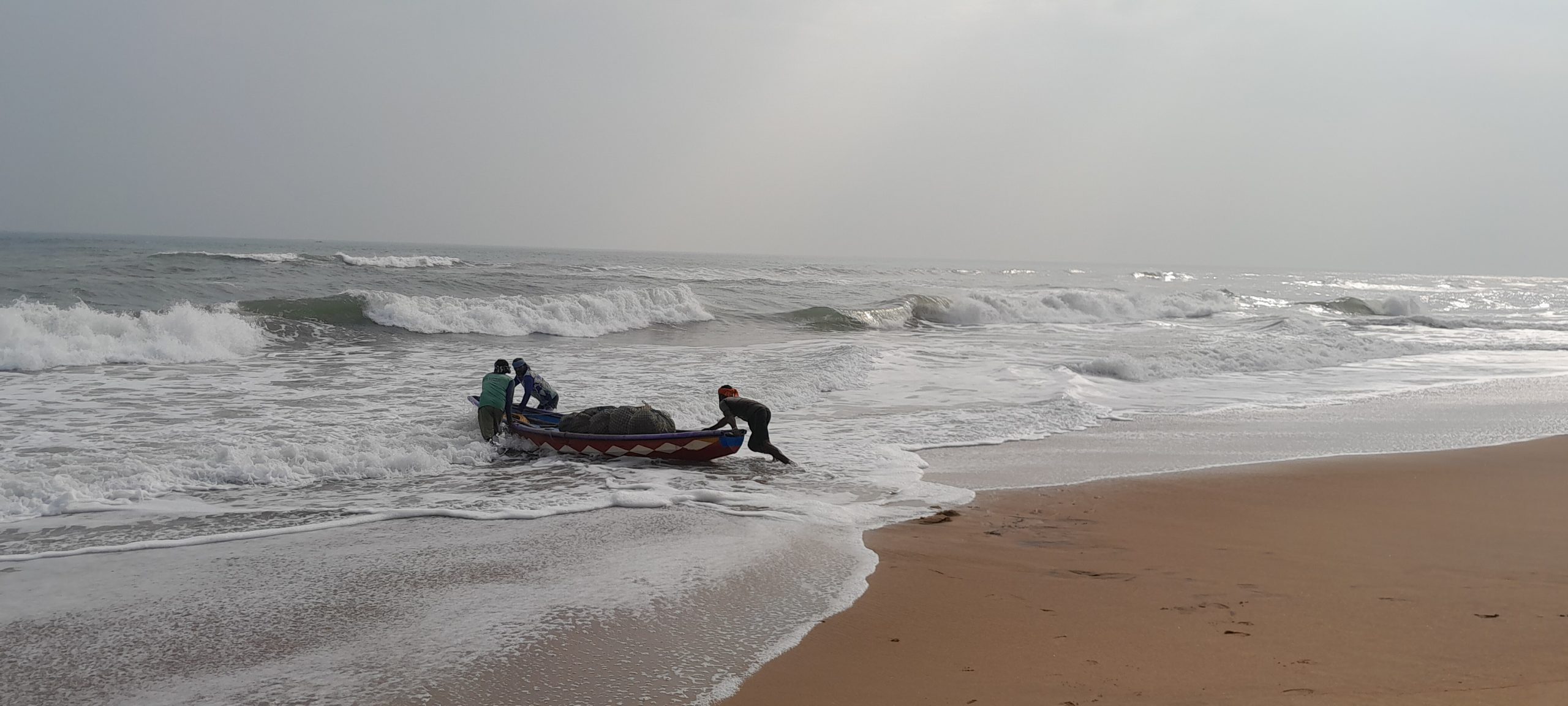
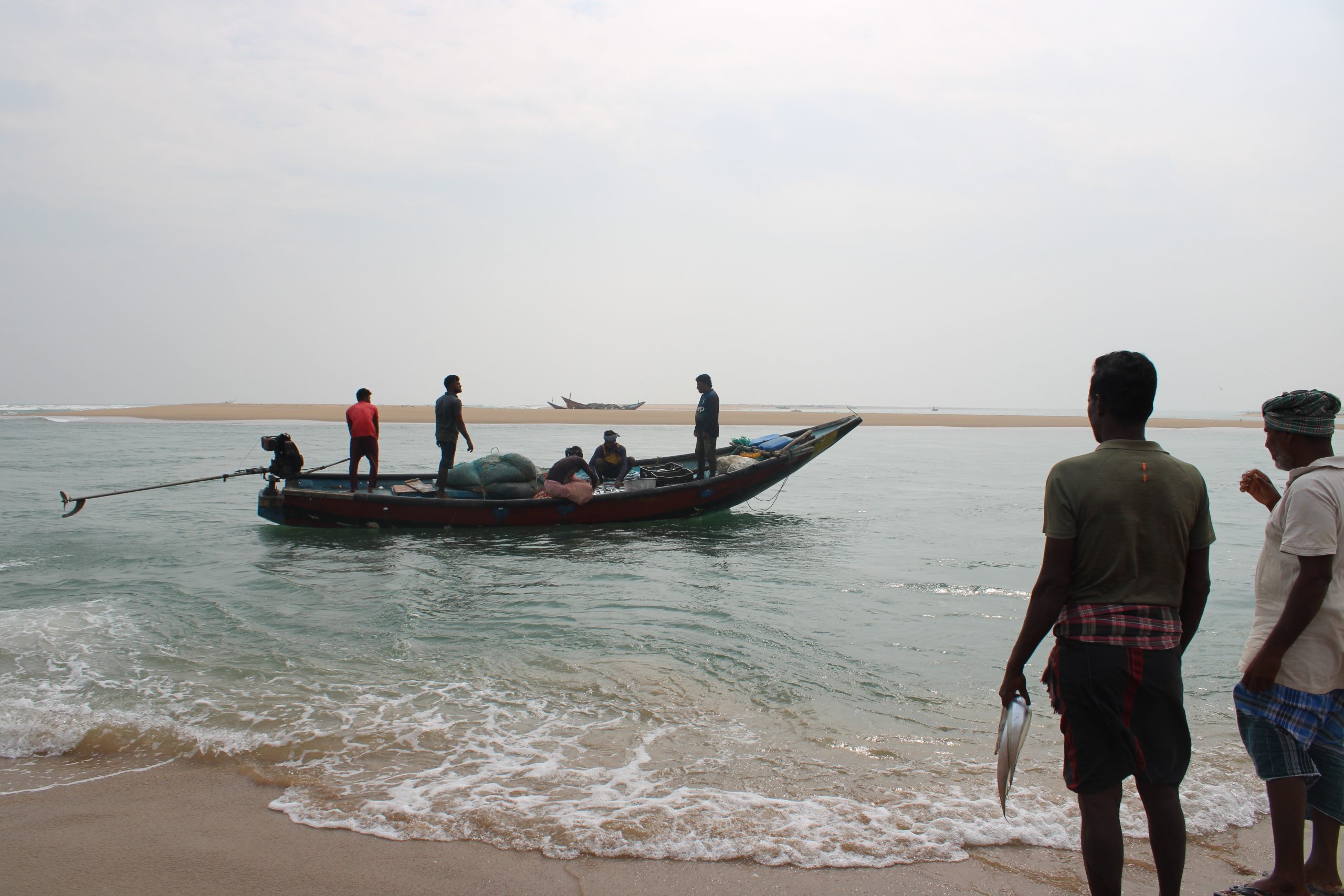
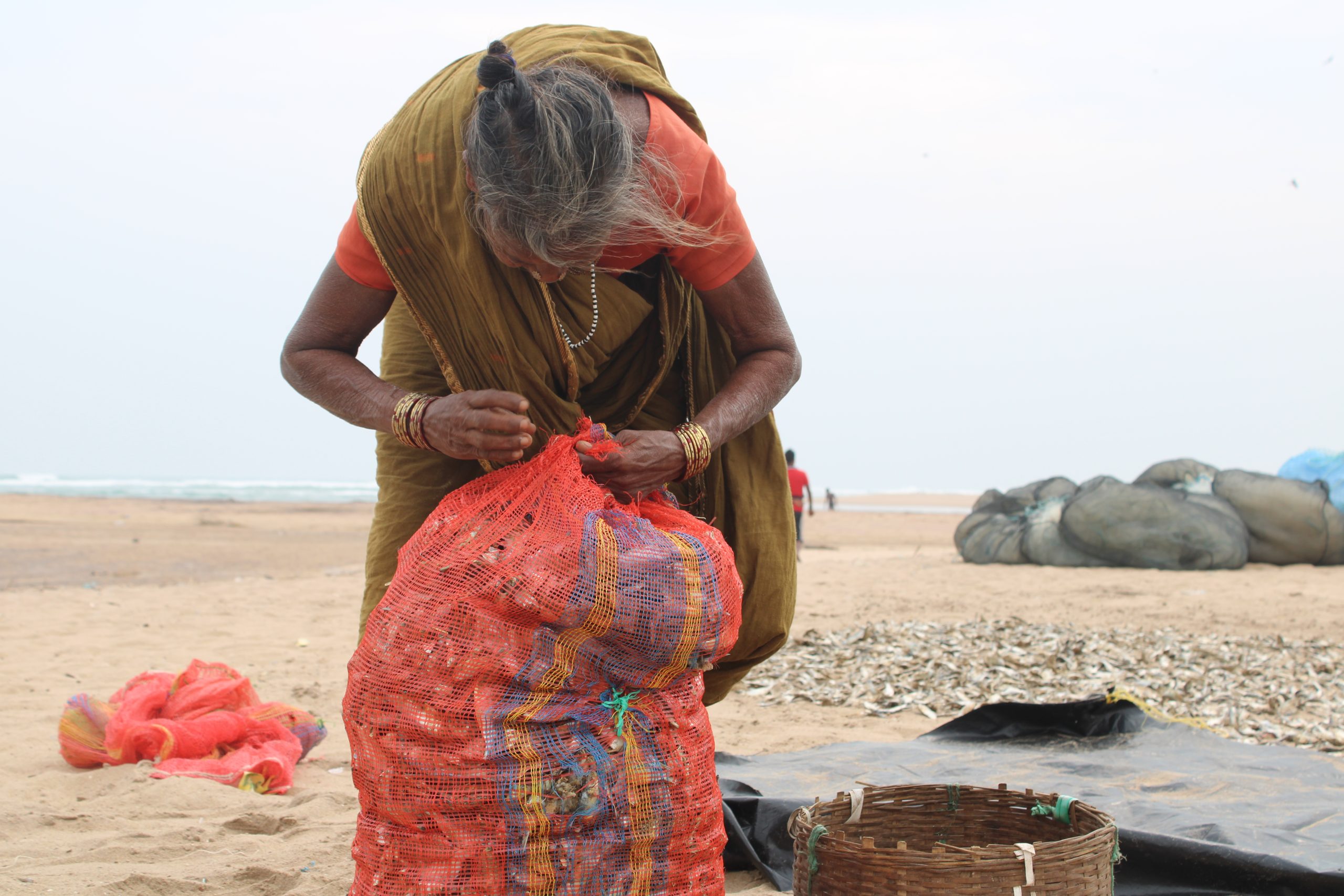
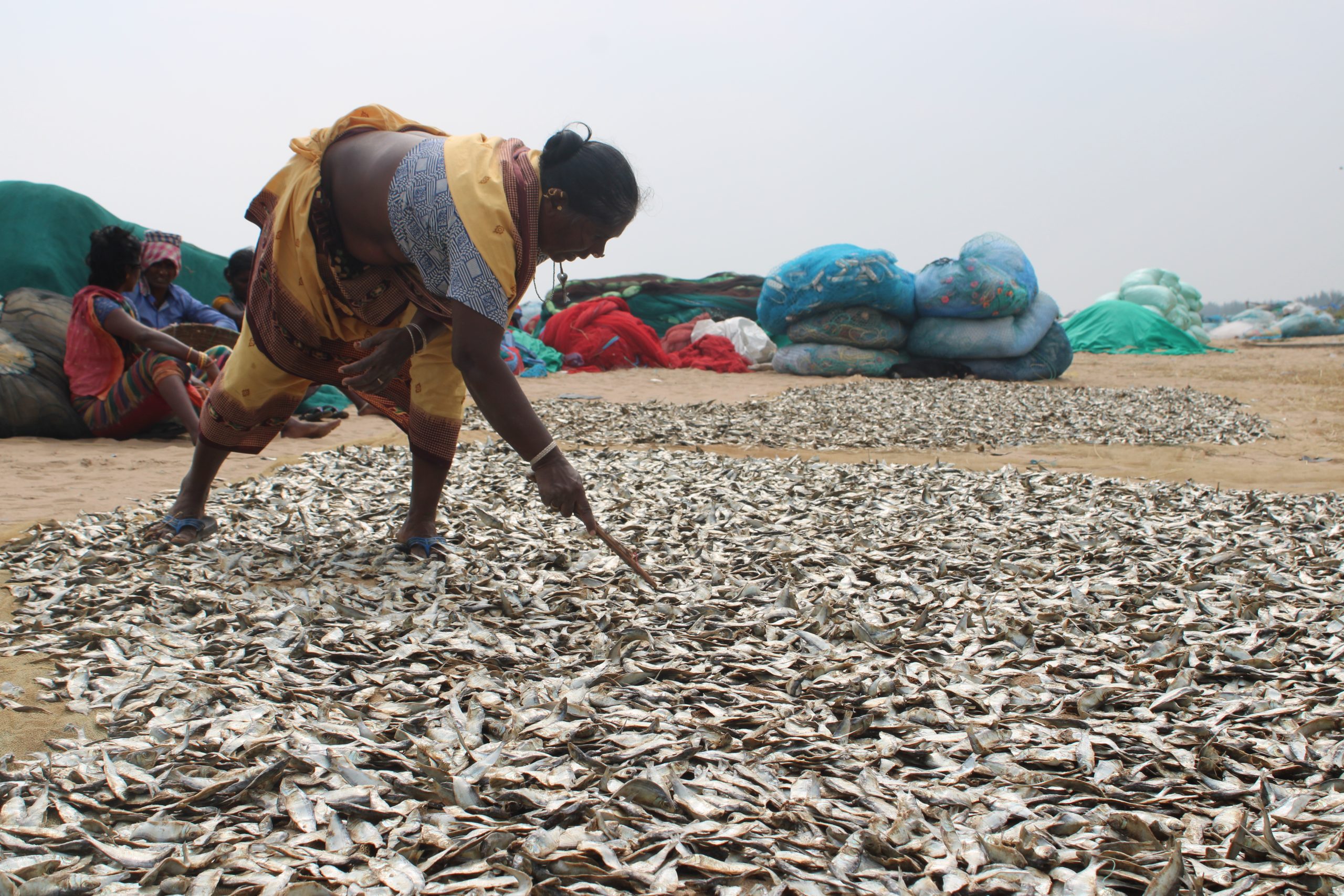
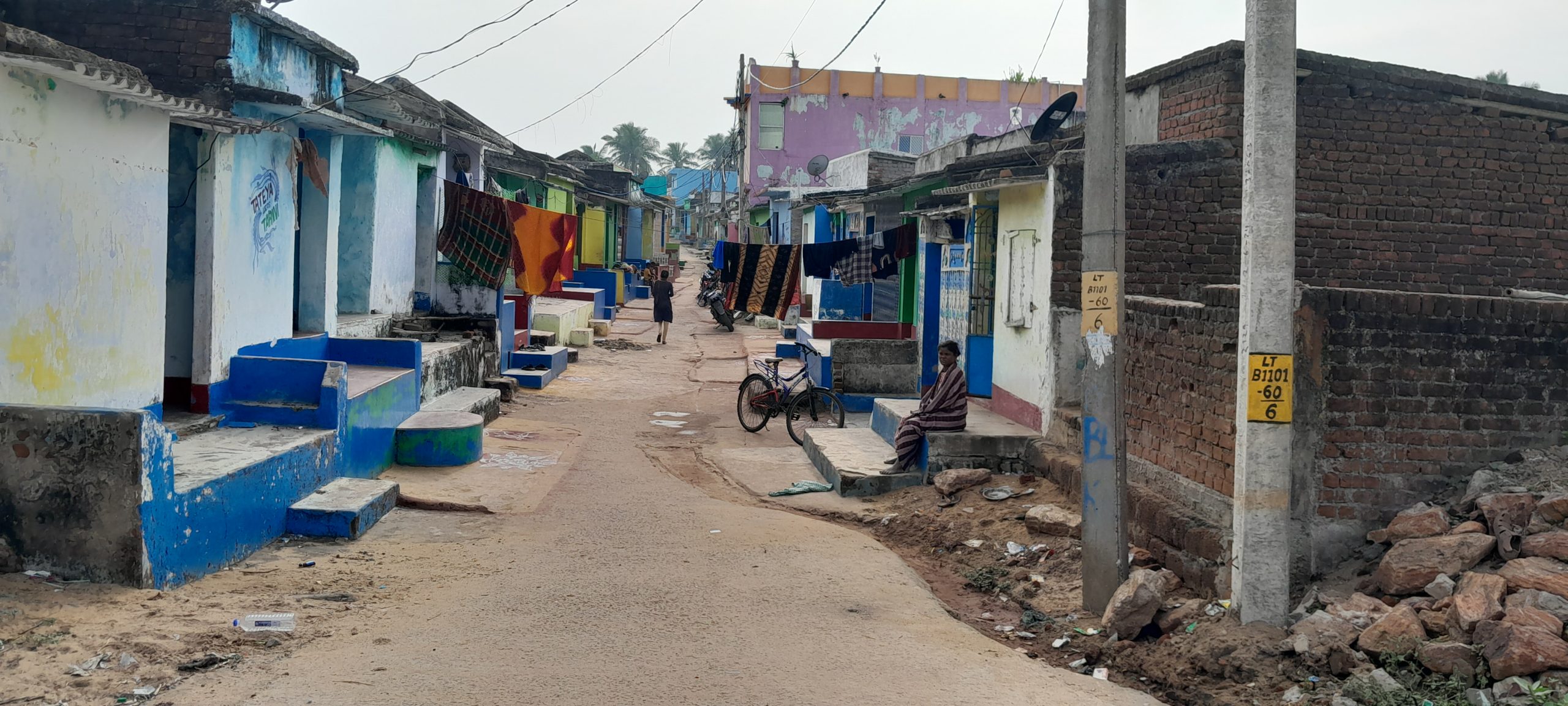
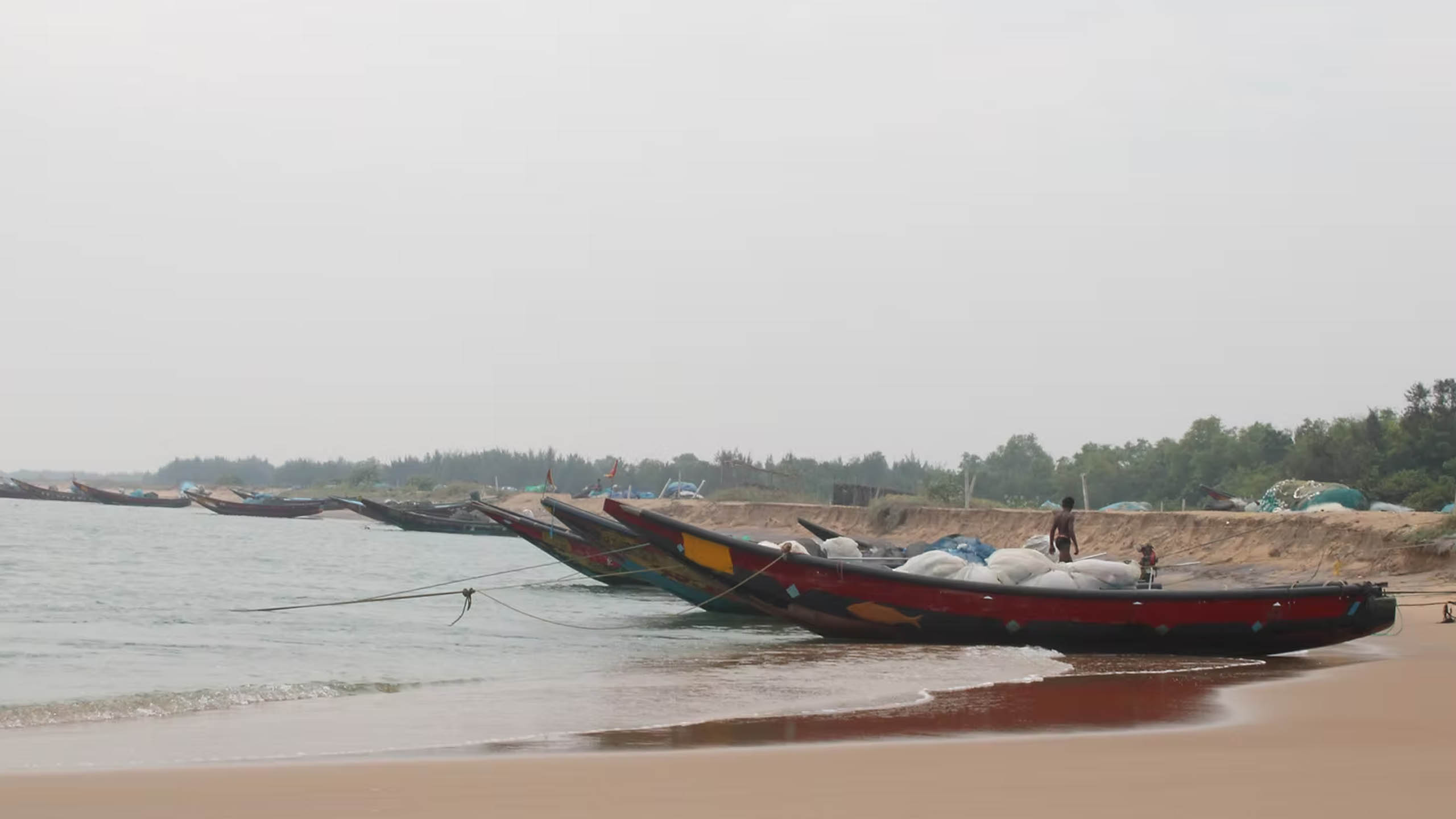
GANJAM, Odisha: The bustle of a full-fledged working day is absent on the beach at Sana Nolia Nuagoan, a fishing village along the Rushikulya rookery coast, a large nesting site for olive ridley sea turtles in Odisha’s Ganjam district. Motorized boats lay anchored, while fishermen linger around playing cards or watching videos on mobile phones. Fisherwomen go about drying fish on the coast.
The 20km Rushikulya coast is in the middle of a seven-month fishing ban implemented by the state government to protect the vulnerable olive ridley sea turtles.
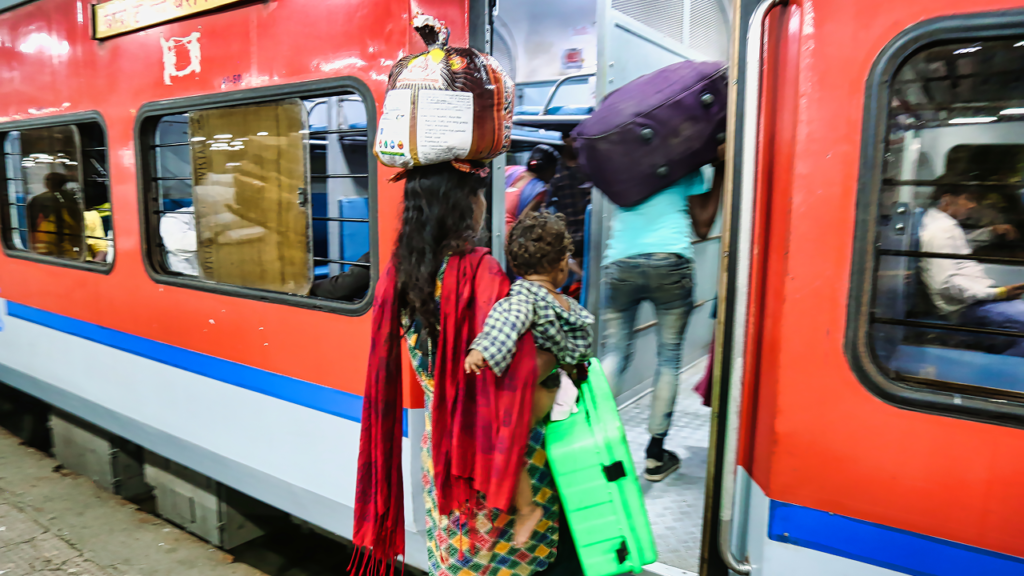
“The sea is our farm and forest; it is our everything. Our livelihood is dependent on the sea,” said Kalleya, who fishes with big boat owners. Over the past five years, when curbs are in force, Kalleya migrates to Andhra Pradesh or Tamil Nadu to work in seafood processing units, leaving his family, including old parents, behind.
The state government introduced the ban to protect olive ridleys along the coastal districts of Balasore, Bhadrak, Kendrapada, Jagatsinghpur, Puri and Ganjam. The marine fisher population in Odisha is estimated to be around 15 lakh and they live across 813 villages. The ban prohibits fishing activities by traditional boats within 5km radius from the coast, motor boats within 10km radius, and trawlers within 20km radius. It also extends to buffer zones of rivers.
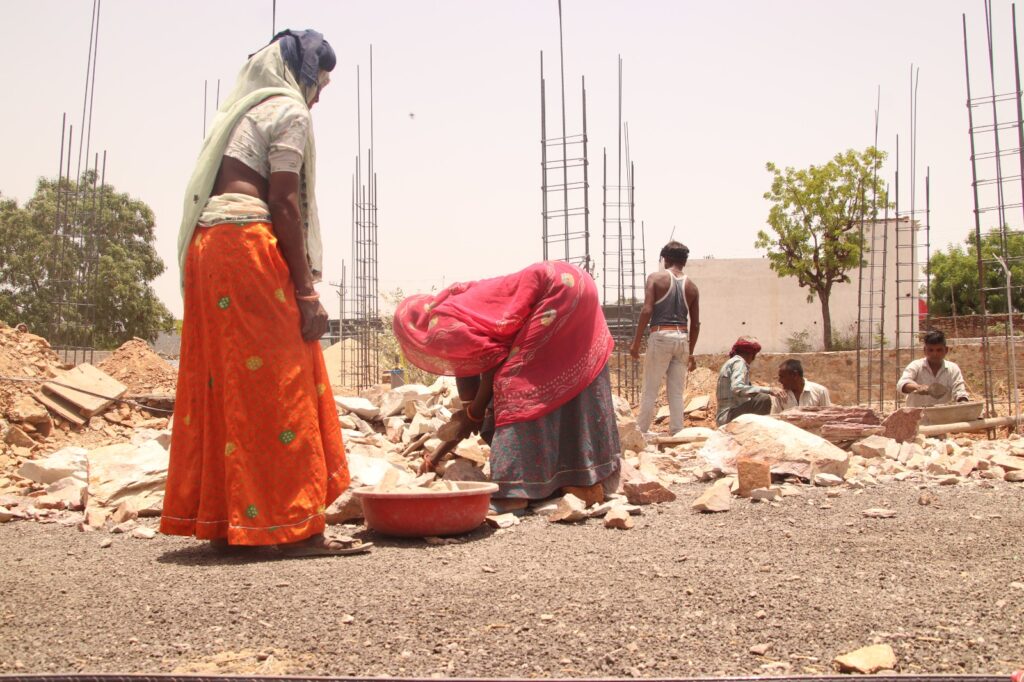
The ban forces most small fishers of Rushikulya out of the region. Not all of them migrate outside the state though. B Jengali (46), for instance, moves to Bhubaneswar to work in construction; he does so to remain close to his aged parents and school-going children. “The ban has ruined our livelihood,” he said.
Jengali is quick to add that the villagers want the vulnerable species to be protected. “We care about olive ridley turtles and want their protection. But what about our livelihood? We have no work here. How will we feed our family?”.
Conservation and livelihood are at odds in Odisha’s coastal villages and the fishing community, reeling from extensive bans, is often left with little choice but to migrate in search of work. Long-running efforts by the state government have bettered the prospects of the vulnerable species. In 2023, a record 6.37 lakh olive ridley sea turtles arrived for nesting on the Rushikulya coast. However, the quiet seas have not augured well for the fisherfolk of the region.
A 2014 study by experts at the Central Institute of Freshwater Aquaculture in Bhubaneswar explored the ‘Socio-economic impact of fishing ban for conservation of Olive Ridley Turtles in Coastal Odisha’.
November to May is when turtles nest, breed, lay eggs and hatch. Mechanized boats and trawlers disrupt their congregation, movement and breeding. High-speed trawlers, the study observed, are the major cause of death of the vulnerable species. But the fishing ban to aid olive ridley turtle protection and ensure marine fish breeding has severe socio-economic impact on the fishing communities living along the coast of Odisha. In Ganjam, fishers of the coastal villages of Kantiagarh, Gokhurkuda, Purunabandha, Sana Nolia Nuagoan, Bada Nolia Nuagoan, Podampeta, Sidhant Nagar, Prayagi, Kadalibadi and Aryapalli suffer the most.
J Dinabandhu, 45, a fisherman of Podampeta village said, “The ban has taken away our livelihood. What will we catch in the remaining four months? Migration from the fishing villages has doubled in the last 10 years.”
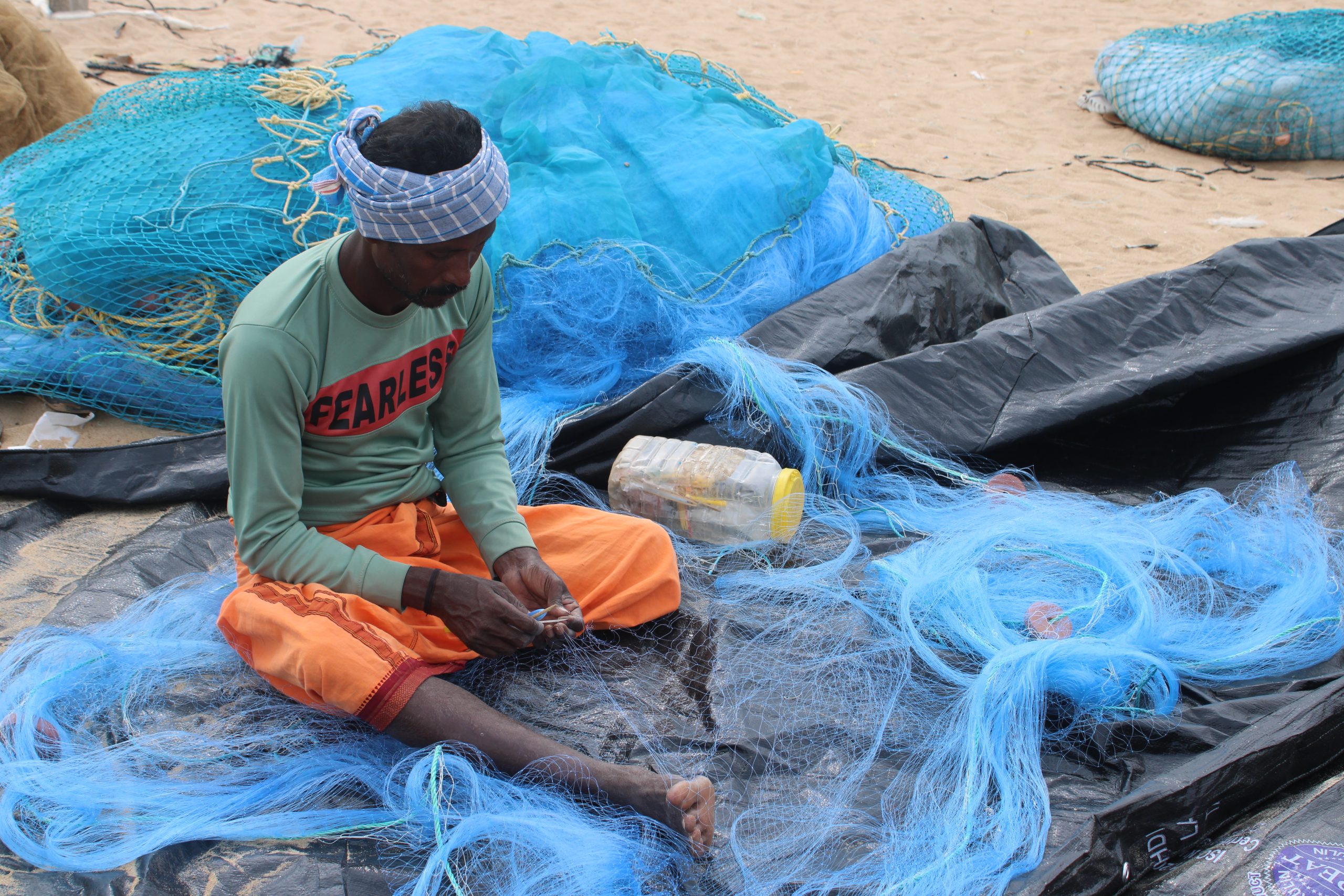
September to March, noted fisherfolk, the peak season for marine fishing coincides with the ban. During the period, they are allowed to use only traditional, non-motorised boats beyond five kilometers from the coast. It means they have to fish deep in the sea, a dangerous prospect on small boats. Often, they do not have large nets required for deep-sea fishing.
WEATHER IMPACTS
Apart from the extensive ban, extreme weather events — deep depressions in the Bay of Bengal and climate-related factors — add to the woes of fisherfolk. Ch. Alleya, president of the Podampeta Village Fishers Committee (PVFC), said, “Fishing is no longer a profitable job. There was a time when fisherfolk earned in lakhs and the small fishers (boat less fishermen), who helped big fishermen, also received a sizable share of the catch and earnings. Now, the bigger fisherfolk have no work, so how will they support small fishermen?”.
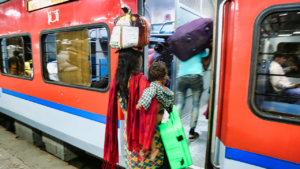
The small fishermen, therefore, migrate to Tamil Nadu, Karnataka, Kerala, Maharashtra, Goa, and Andhra Pradesh to work in sectors including fishing, sea food processing units for instance, or even construction. Ch. Alleya pointed out that in the ban-free months the coast is vulnerable to cyclonic storms, and most fishermen refrain from going into the sea from June to October.
Mangaraj Panda, convener, Odisha Marine Resources Conservation Consortium (OMRCC), observed, “The migration of fishers from Ganjam district started since the super cyclone in 1999 when they noticed that the catch within the 5km radius of sea shore had started falling for various reasons. Migration increased with two successive disasters — Cyclone Phailin in 2013 and Cyclone Hudhud in 2014 — hindering their regular venturing into sea and also affecting the catch. This forced small fishermen to leave behind their traditional livelihood and migrate to Tamil Nadu and Andhra Pradesh to work in construction sites.”
Fishing in the Odisha villages have undergone changes over the years. “Two decades ago, fishermen hardly used mechanized boats,” said Panda, and added, “When the state government provided subsidy on motorized boats, they shifted from traditional boats (teppa) to mechanized ones.” It was common for five families to come together and use a teppa which was made of light wood. They fished in the sea, the Rushikulya river, and the estuary throughout the year.
The state government under the Mukhyamantri Maschyajibi Kalyan Yojana (MMKY) grants one-time assistance since 2016-17 as livelihood support to boat owners or crew members or workers engaged in sorting, grading and other ancillary fishing activities. The amount was raised to Rs 15,000 in 2022-23. According to government data, the assistance is provided to around 24,000 fishers in the state out of which 3638 families are from Ganjam.
It is a case of too little, too late, say union leaders.
K Allaya, general secretary of Odisha Traditional Fish Worker’s Union said, “The assistance is for the loss of work for seven months. It is insufficient when compared to present market price. It is not enough to run a family. We are demanding Rs 20,000 as assistance.”
The long ban does not just affect the seafaring people but also women who are active participants in allied activities such as selling fresh catch, making dry fish, and preparing salted fish (locally called Sukhua).
“The men of the family go into the deep sea for fishing, and women take part in its selling, drying, loading and packing. When fishermen do not go into the sea, we lose work as well and have no money in hand,” said Buguru Buchiamma, a 65-year-old fisherwoman from Podampeta village.
“Many women go to Berhampur and Chhatrapur (nearby towns) to work as daily-wage labourers,” she said.
Panda of the OMRCC said that almost all fishermen in Ganjam are landless, and dependent on sea for livelihood. “As the ban forces men to migrate, women are left to shoulder household burden, children’s education and health of elders. To meet family expenses, they work as daily wagers. It is not uncommon for adolescent boys and girls to discontinue studies and move out in search of work,” he said. Though severely affected by the ban, women do not receive financial assistance.
Buchiamma said that Podampeta is particularly susceptible to cyclonic storms and sea erosion. “There is a continuous threat to our livelihood. The government should look for an alternate livelihood for us. When parents move out for work, the education, nutrition and well-being of children are affected,” she said.
MIGRATION, THE WAY OUTGanjam is amongst the fourteen migration-prone districts in the state identified by the Labour Directorate, Government of Odisha, based on the magnitude of out-migration from the district.
B Rameya, 34, from Sana Nolia Nuagaon has been migrating to work in a seafood factory. “We have no preference for work. Whatever work comes along, we accept. Work in construction sites is difficult and the income is less. But those who cannot get work in seafood factories, go into construction,” said Rameya.
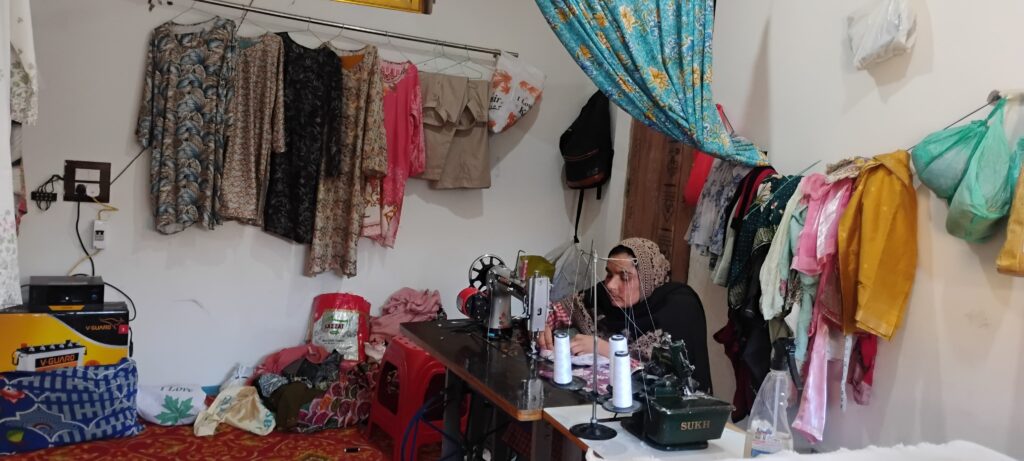
For communities rooted in their region for generations, migration throws up multifaceted challenges. Twenty-two-year-old Kumud (name changed) from Podampeta is among the smaller group of women who have migrated to work in a seafood factory in Tamil Nadu. “When we migrate, we regularly face verbal abuse for not understanding the local language and not communicating properly with the supervisor. We have no choice but to migrate. If we stay home, we will starve,” she said.
Panda called for urgent, innovative interventions to protect the interests of the coastal fishing community of Odisha.
“The government should register their names in the panchayat and provide safe migration, and present people who are left behind an alternate livelihood option,” he said.
He underscored how the local community can be critical to olive ridley sea turtle conservation. “Involving villagers in the protection of the turtles on the Odisha coast will minimize their financial burden. Their knowledge can help protect the vulnerable species,” he added.
Meanwhile, for those like Kalleya, leaving is the only option for now.
Rakhi Ghosh is an independent journalist based in Bhubaneswar, Odisha. She is a former print and television journalist and she writes stories on health, migration, education, climate change