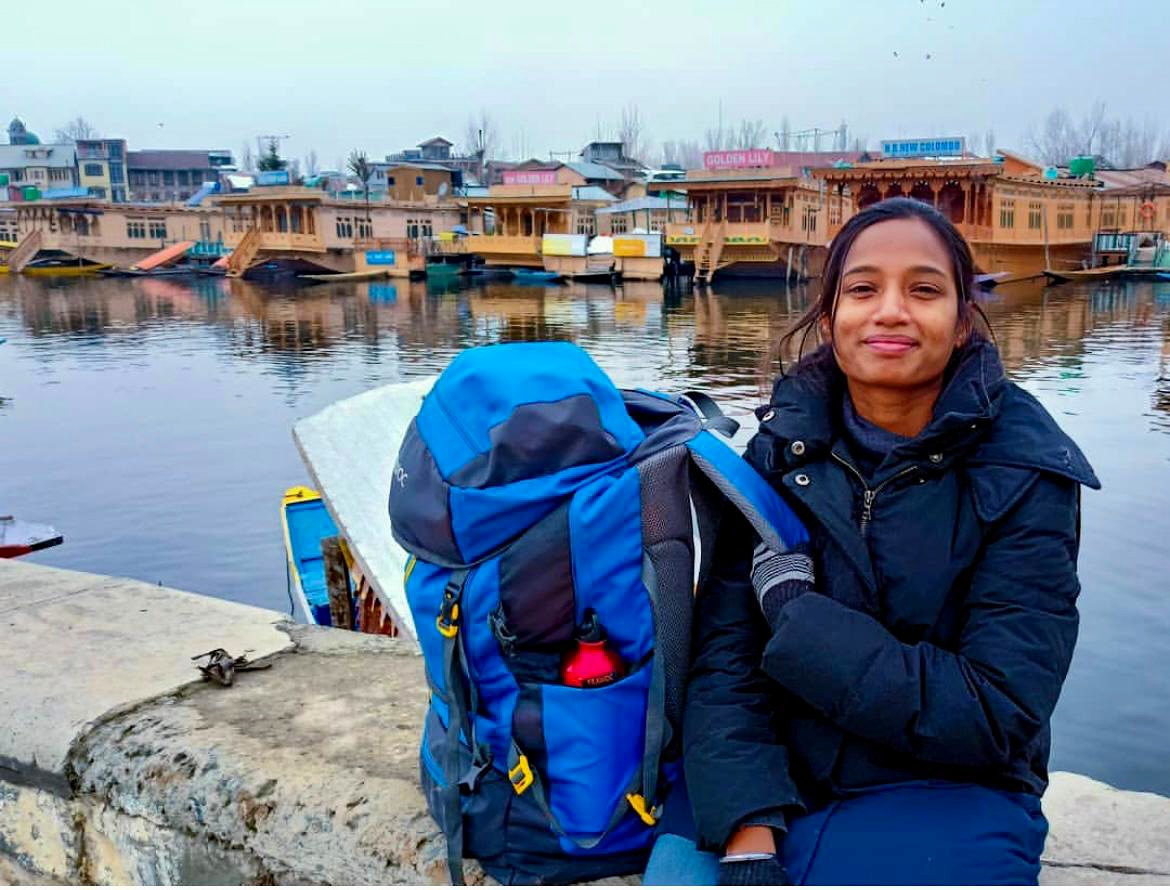
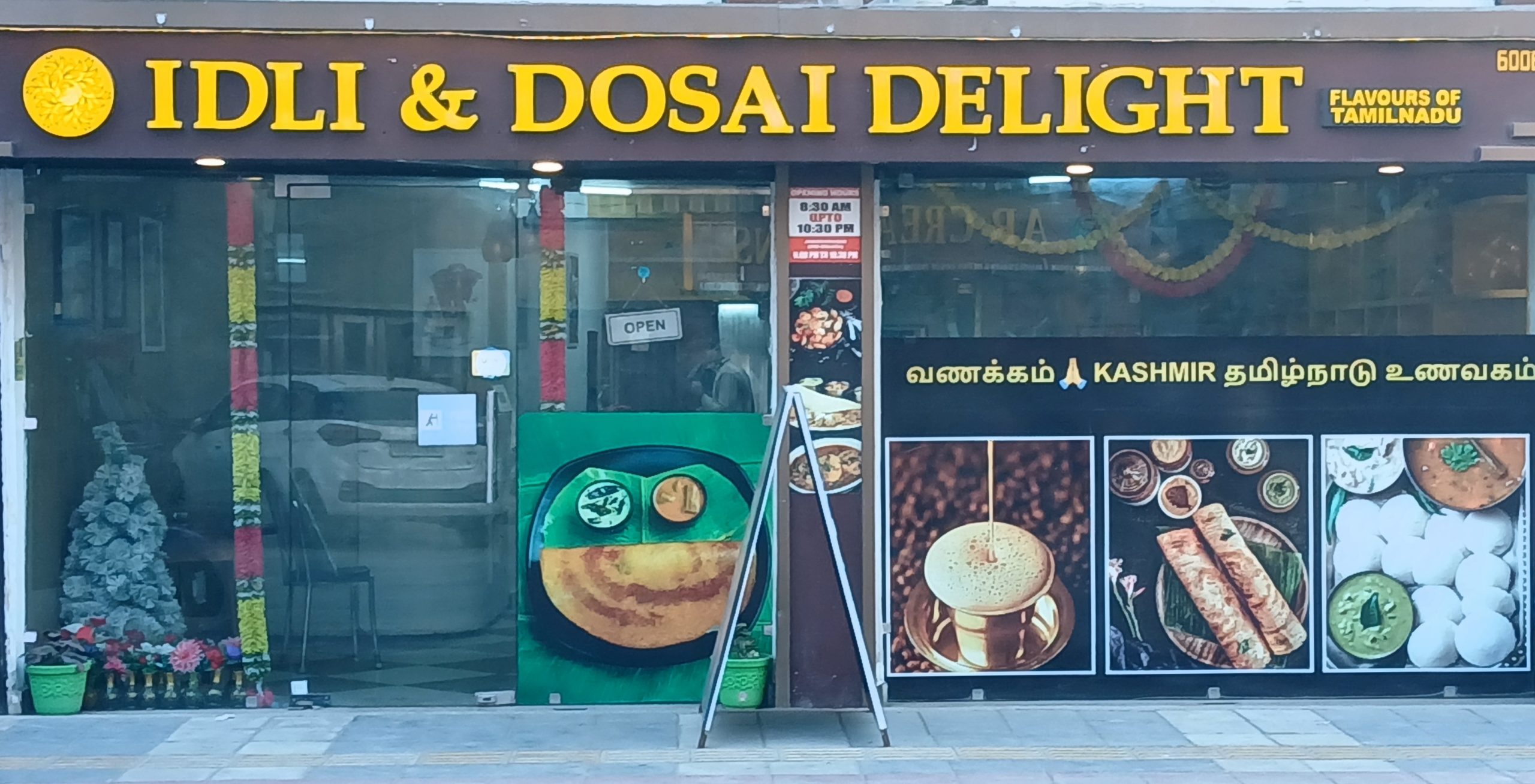
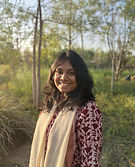
SRINAGAR, Jammu & Kashmir: It was around 4 pm and the warm aroma of freshly made idlis and dosais filled Idli Dosai Delight, a restaurant in the Khayam area of Srinagar. The manager sat at the counter, while a few customers waited for their orders at the tables. The restaurant was founded by Sindhu, a 26-year-old first-generation migrant from Tamil Nadu who arrived in Kashmir in February 2021.
Her first impression was shaped by Kashmir’s natural beauty, but also and more importantly, by its people. “In some places, I did feel a little discrimination because I am South Indian. But in Kashmir, never. Not even a single day. That made me want to stay,” she told The Migration Story. “I felt an instant connection. The people were so kind. They made me feel safe,” she said.
When Sindhu, who prefers to be identified by just her first name, boarded a train from Delhi to Jammu, she had no idea that it would change her life. She had heard many negative stereotypes about Kashmir before coming. Her move to Kashmir, though unplanned, has now built a vibrant life nearly 3,000 kilometres from her hometown, which involves running two restaurants and a tours and travel company.
She said that back in her hometown of Pudukkottai, a small village in Tamil Nadu, her parents forbade her from stepping out of her home past 7 pm. “In Kashmir, I usually close my restaurant late at night, drive alone and have never faced any single harassment, not even once in these 4 years. This is the place where I feel safest,” she told The Migration Story, adding that it became one of the strongest reasons behind her decision to stay in Kashmir.
After finishing school in Pudukkottai, where her mother and two younger siblings—a sister and brother—continue to live, Sindhu moved to Chennai to pursue higher studies, the first in her family to do so, and graduated in Commerce. While she was still in college, her father, who drove a truck, passed away, and she became the sole earning member of the family.
“My father’s dream place was Kashmir. He always used to say that he wanted to visit this beautiful place, though he never got the chance. Maybe that is also one of the reasons why I feel so connected to Kashmir,” she said, adding that despite being poles apart from Pudukkottai, she feels a deep connection with the valley.
When COVID-19 struck and the world shut down, she got the idea of exploring the different places in the country. She decided to step out after the lockdown restrictions had been lifted. Unsure whether her friends would accompany her, and having always wanted to travel, she made a bold decision: she would backpack solo across the country. Starting from Kerala, she travelled to Karnataka, Maharashtra, Madhya Pradesh, Uttar Pradesh, Gujarat, Rajasthan, Uttarakhand, Himachal Pradesh, Chandigarh, and Delhi.
“Honestly speaking, I hadn’t planned to visit Kashmir initially. However, when I was in Delhi, I randomly checked if I had the budget to visit any other places and also if there were any trains available. That’s when I found a train to Jammu-Tawi. I just thought, ‘Okay! Let me go,” she said.
Kashmir’s cold winters couldn’t be more different from the sweltering heat that Sindhu was accustomed to back home. However, over time, her emotional connection to the valley grew stronger, and she said that her father’s unfulfilled dream was behind this bond.
Sindhu regularly posted simple, honest videos of her travels across Kashmir, which included treks, local interactions and vlogs showcasing the region’s culture, on her YouTube channel. It resonated with audiences from her home state. “Many people told me, after watching my videos, they cancelled their plans for other states and booked Kashmir instead. That really touched me,” she said.
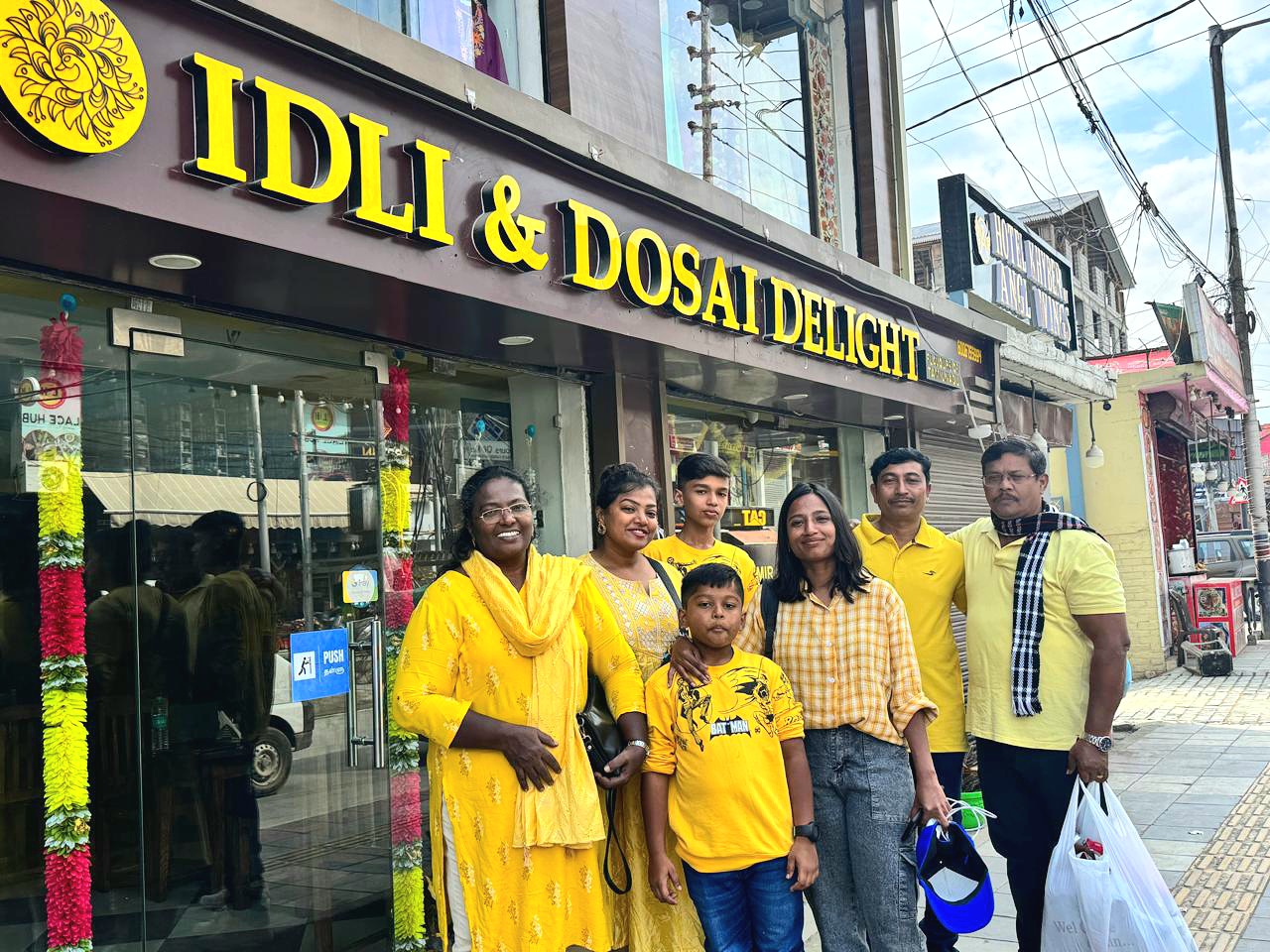
In August 2022, Sindhu took a big step. She formalised her travel guidance work into a tour-and-travel company, organising full-fledged trips for tourists, especially families from Tamil Nadu. She opened an office in Srinagar in October 2023, and today the company has around 24 employees and has organised tours for over a thousand groups, most of whom are from her home state. “They don’t explore much outside. So when they see a Tamil girl living in Kashmir, they feel comfortable choosing Kashmir,” she said, adding that she did not want to expand her business anywhere else in India.
THE IDEA THAT STARTED WITH IDLI
While guiding tourists, Sindhu noticed one issue: there was no authentic South Indian restaurant in Kashmir. Many tourists from the South struggled with the climate and fell sick, craving simple comfort foods like idlis. “I thought, why not start something small? Just a small idli shop for tourists,” she said.
In September 2024, she opened a tiny, 120-square-foot shop in Rajbagh. While it was started for visitors from the South, something surprising happened—Kashmiris began coming in large numbers. Soon, only 10% of her customers were tourists. The remaining 90% were locals, who had studied or worked in Chennai, Bengaluru, Kochi or Hyderabad and missed South Indian flavours. Sindhu realised she had unintentionally tapped into a hidden emotional connection between Kashmir and South India.
Dr Ibrahim Wani, who teaches at Kashmir University and has conducted research on migrant workers in the Kashmir Valley, told The Migration Story that the state attracts a large number of seasonal migrant labourers who mostly work in daily wage jobs in construction, workshops, and agriculture. He added that the region also attracted small entrepreneurs, who take up small dhabas and restaurants on rent in the tourist season. “Now, with changing tastes, such entrepreneurs have also introduced South Indian and Bengali eateries and restaurants. Idli and Dosai Delight is an apt example,” he said.
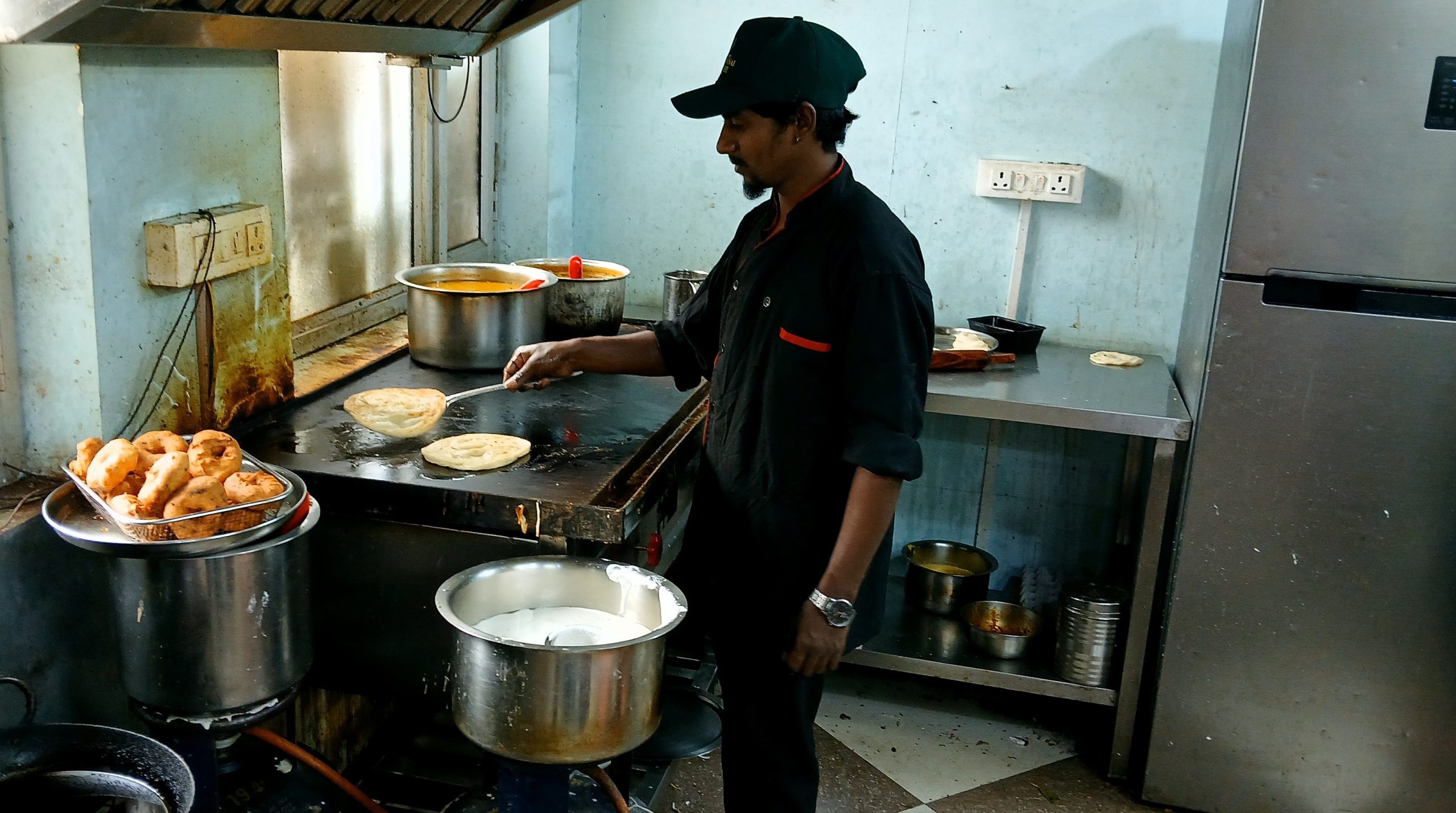
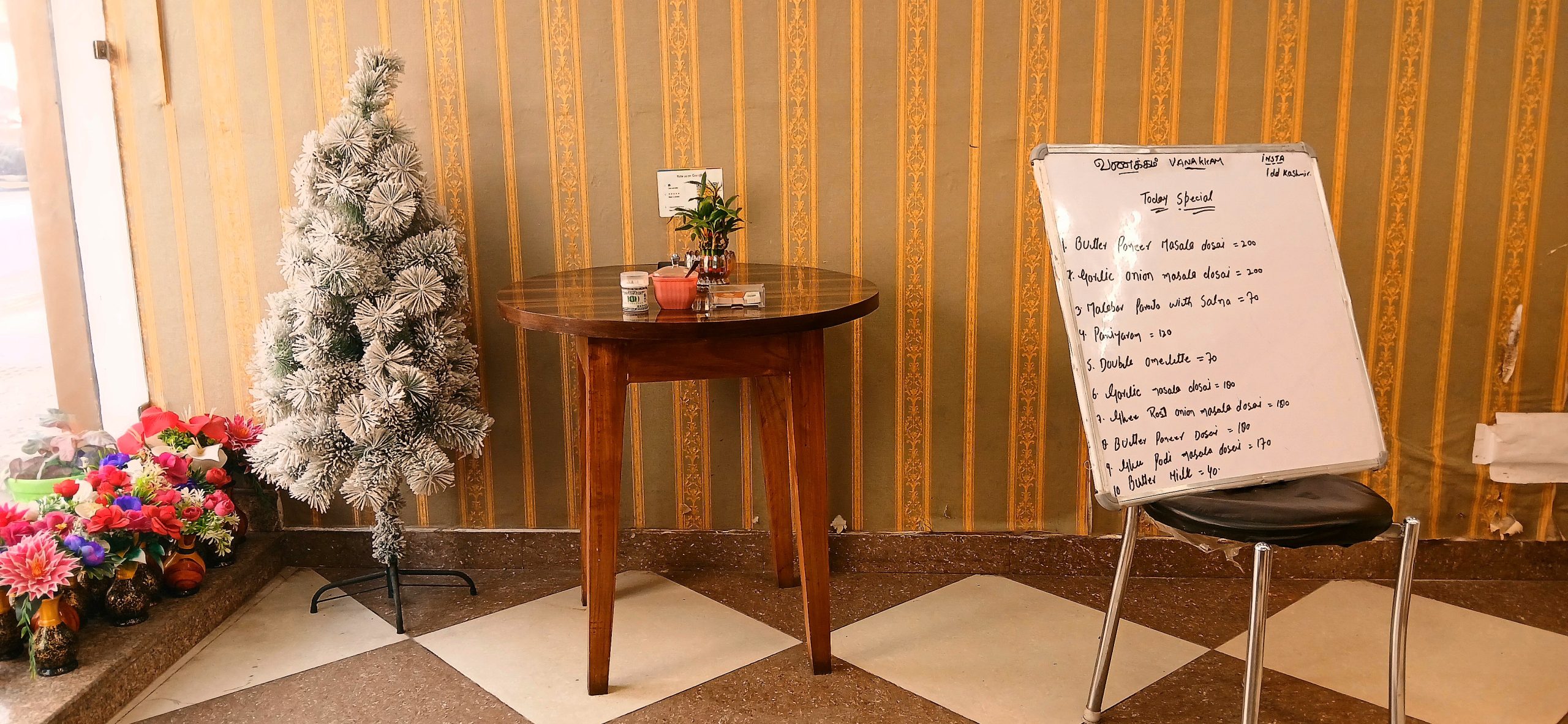
To maintain authenticity, she hired a chef and helper from her home state and procured spices and ingredients directly from Tamil Nadu. “Taste and authenticity matter. You can’t replace Tamil spices,” Sindhu said, and added that their garlic dosai has become the best-seller.
“We also have many kids as customers. We sell mini idlis especially for them, and fortunately, they love them. Because the kids enjoy the mini idlis so much, their parents keep returning to the restaurant. This is a very unique and sweet kind of response that I receive, even from children,” she said. Other popular dishes include butter masala dosai, pudi dosai, malabar parotta and weekend Tamil-style biryani. Customers travel from faraway places, like Tangmarg, Kangan and Sopore, just to eat at her restaurant.
One of Sindhu’s most memorable moments was when Omar Abdullah, the present Chief Minister of Jammu and Kashmir, visited her restaurant. Because her outlet was small, he had his food served in his car. Later, his father, Dr Farooq Abdullah, visited with his family on different occasions.
“When Farooq sahab came with his grandson, he said, ‘We liked it very much. We will come again tomorrow.’ The next day, Omar Abdullah also came. I wasn’t expecting it,” she said. Omar Abdullah told her that in the 1990s, there was a good South Indian restaurant in Kashmir. “He said, ‘Since then we hadn’t tasted such tasty South Indian food as yours,’” Sindhu said, adding that the words felt like a recognition not just of her cooking but of her journey.
EXPANDING BUSINESS OPPORTUNITIES
In January 2025, Sindhu opened a spacious restaurant in Khayam, a major food hub in Srinagar known for its non-vegetarian food. Her vegetarian South Indian cuisine provided diversity to the food scene. However, her loyal customers from Rajbagh, Sanat Nagar, and Jawahar Nagar missed her. So she opened a branch in Jawahar Nagar for them.
Meanwhile, she also began training local Kashmiri chefs. “I want them to learn and earn. I would love to teach more local chefs. In fact, we previously had a Kashmiri chef at our Jawahar Nagar branch, but he left due to the winter as he found a job in Delhi. Although I currently have a Tamil chef, I would still love to train and support local chefs as well,” she said, adding that her team now includes Tamil cooks and helpers, with all other staff—housekeeping, waiters, managers, and accountant—being local Kashmiris.
Even as her restaurants were growing in popularity, she was taken aback when a Kashmiri woman invited her to set up a South Indian food counter at a wedding. Weddings in Kashmir revolve around Wazwaan, the grand Kashmiri feast. Standing next to the legendary Wazwaan counters, Sindhu set up a small dosa stall. “We were told to prepare around 500–600 dosas, but we ended up selling more than 1,000! People loved it,” she said, adding that she received around four more wedding bookings that night and has since served at seven weddings.
Mir Zuhaib Nissar is an independent journalist based in Srinagar, with a focus on narrative-driven storytelling and an emphasis on underreported stories from the region.