VALPARAI, Tamil Nadu: Manoj Munda travelled almost 2,000 kilometres from Jharkhand to Tamil Nadu with his wife, Monica, his daughter, Roshni, and the faint hope of starting a new life. The couple, from Chaha village in Gumla district, had heard that tea estates in the hills of Valparai taluk in Coimbatore district, offered steady work and a stable income. They never imagined that migrating for work would cost them the life of their child.
On June 20 last year, at around 4:30 pm, four-year-old Roshni was reportedly playing near a temple close to a privately-owned tea estate. Monica, who was working nearby, saw a leopard hiding in the bushes drag Roshni away in a matter of seconds. Monica’s screams drew workers to the spot, who started looking for the child in the thickets as the light faded.
Police and forest officials then launched a search operation for Roshni, but had to abandon it due to poor visibility and nightfall. The next morning, Roshni’s remains were discovered about 700 metres from the Mundas’ home. The leopard had mauled her to death, leaving her parents devastated.
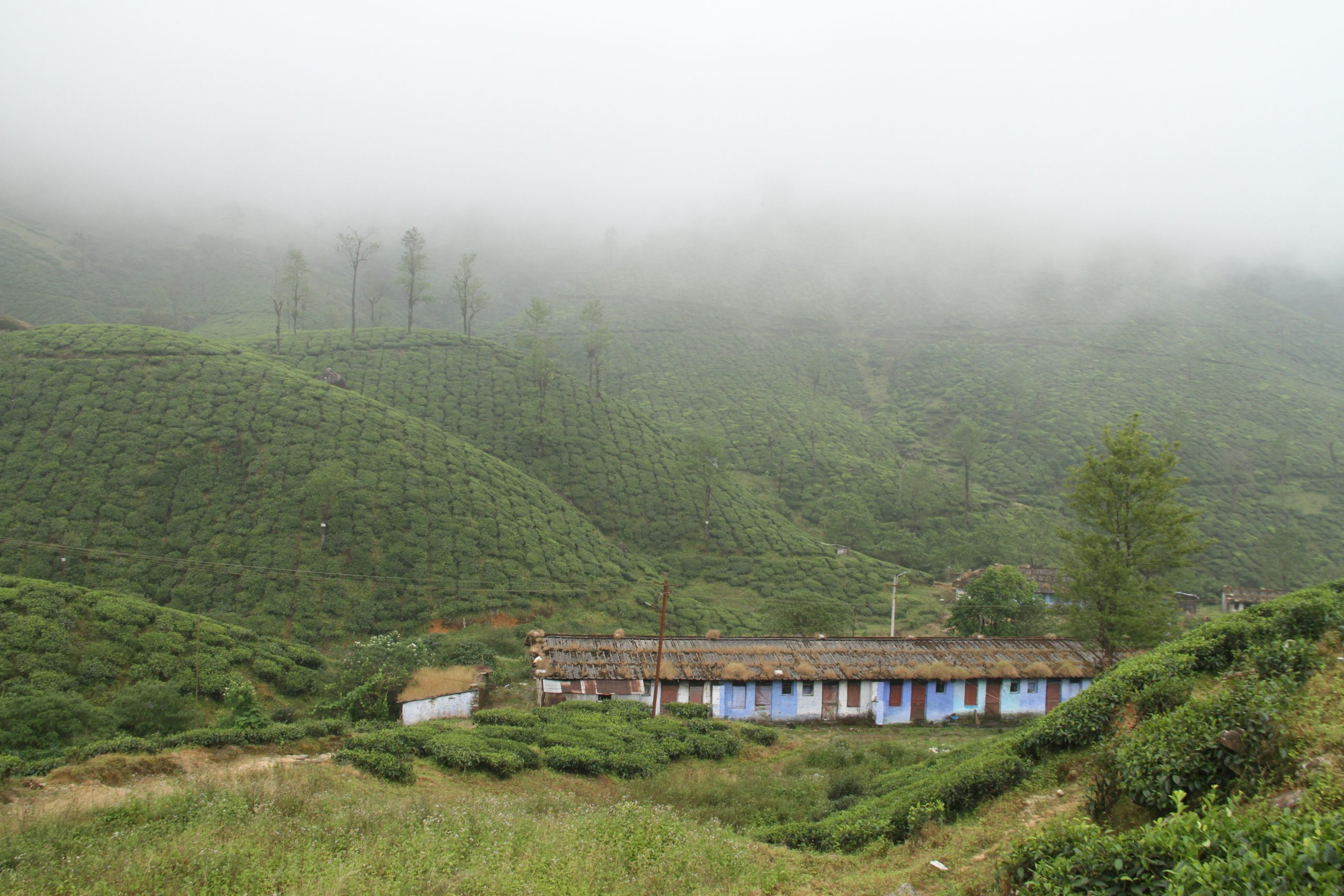
But Roshni’s death was not an isolated incident. In Valparai, leopards, elephants and bears have been known to kill migrants and locals working on the estates as well as their children. These estates were carved out of the forest, and migrants, unaware of the region’s human-wildlife conflict, are extremely vulnerable to wildlife attacks and have fallen prey to them frequently.
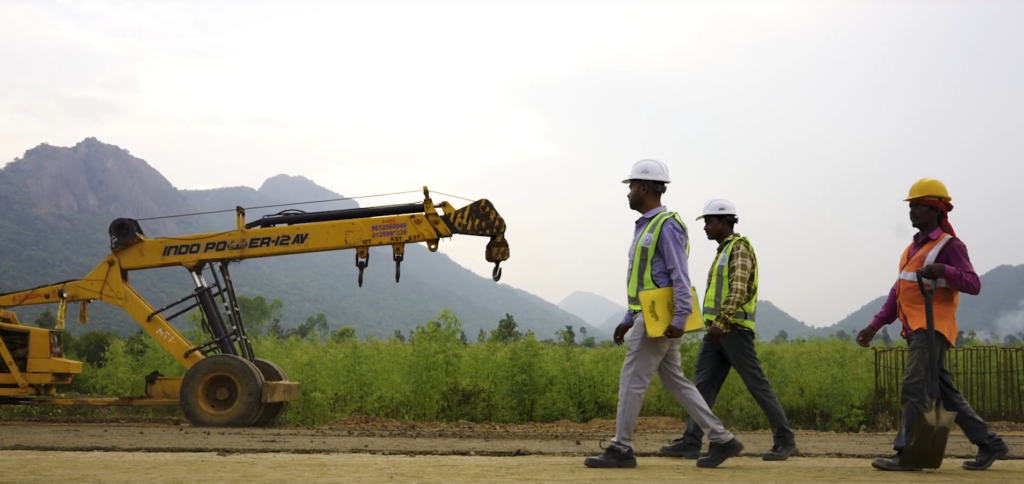
Valparai’s tea estates produce thousands of tonnes of tea each year and provide employment to thousands of migrant families who come here to escape poverty, debt and sometimes hunger.
Migrants employed at the seven private tea and coffee estates this story was reported from say they often see elephants, bison, leopards and snakes moving through the tea bushes.
Every year, on average, four migrant children are killed in wildlife attacks, say Forest Department field staff. It is simply because they stepped out of their homes to get water, milk or firewood, or, as in Roshni’s case, to play.
“We have seen this happen again and again,” said Sushanti Kumari, also from Chaha village, who moved to a tea estate in Valparai with her husband, Jitram, eight years ago. “After every death, there is talk of action, but on the ground, nothing changes. We still have to walk through the bushes, we still have to leave our children at the [estate-rub] crèches when we go to work, and we still have to have to live with the same fear.”
However, after a five-year-old boy, originally from Assam, was killed by a leopard in Valparai in December 2025, the fourth such child death in the taluk in six months, the Tamil Nadu government constituted a six-member expert committee to recommend measures to prevent human-animal conflict and ensure safety in the region.
However, after a five-year-old boy, originally from Assam, was killed by a leopard in Valparai in December 2025, the fourth such child death in the taluk in six months, the Tamil Nadu government constituted a six-member expert committee to recommend measures to prevent human-animal conflict and ensure safety in the region.
HOW MIGRANTS CAME TO VALPARAI
By the mid-19th century, large tracts of hilly shola forest in Valparai, contiguous with what is today the Anamalai Tiger Reserve, were converted into tea and coffee plantations by the colonial administration and private companies. Labourers from across Tamil Nadu were brought to these hills in the Western Ghats, and they formed the first estate communities.
For generations, working on an estate provided relative wage stability. In recent years, however, as public education, healthcare and transportation in Valparai improved, the younger generation was able to acquire formal education, language skills and other credentials. Many of them moved to the plains either for education or work, creating local labour shortages. This is when migrant workers stepped in.
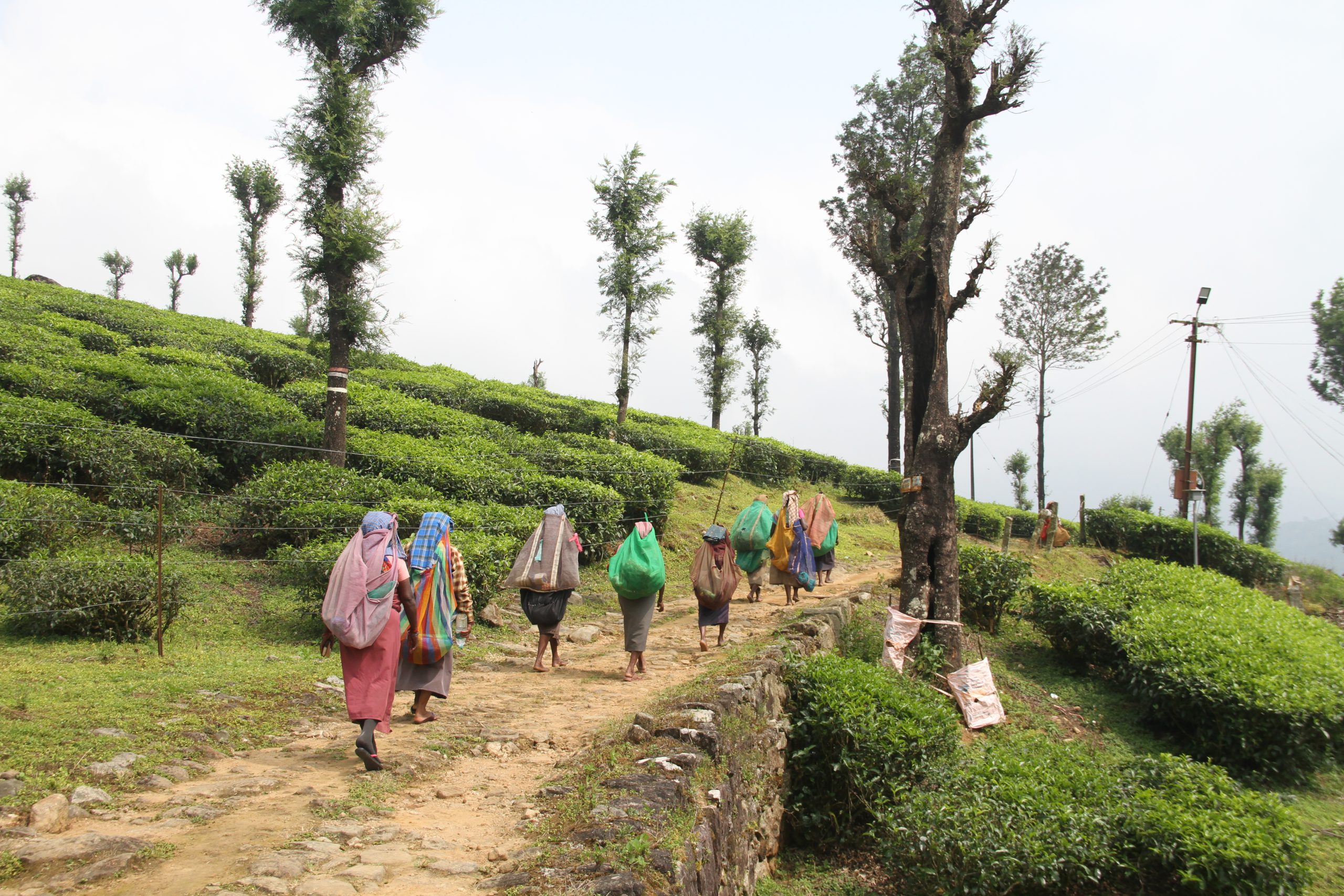
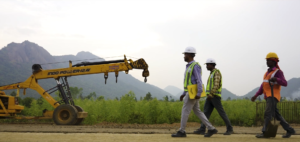
Labour unions and activists estimate that of the 15,000 workers employed at Valparai’s 30 estates, nearly 5,100 are migrants from northern, central, eastern and northeastern states. Though the estates employ locals and migrants, workers are now predominantly migrant, many from Jharkhand, Assam, Bihar, Chhattisgarh and the North-East.
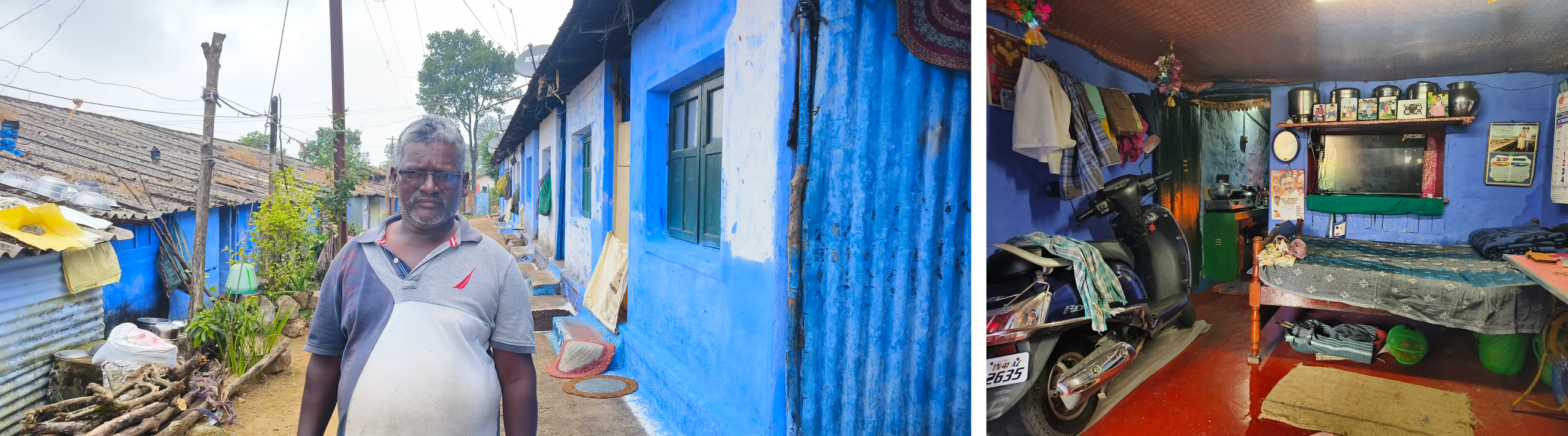
They end up living in cramped rooms, with water taps and toilets nearly 350 metres away. Their quarters aren’t fenced off from the forested areas, however. So wild animals move about freely, close to human habitation. The estate’s only fencing is on its outer edges to keep out elephants. All of this increases migrant workers’ vulnerability.
Only 50 days after Roshni’s death, another migrant child, Nurul Islam, who had stepped out of his home to buy milk from a local shop, was killed by a bear.
HUMAN-WILDLIFE ENCOUNTERS IN VALPARAI
Valparai’s tea estates are inside the buffer zone of the Anamalai Tiger Reserve, and workers’ settlements are often just a few metres from the forest and active wildlife corridors.
“Valparai is essentially a forest region first and a plantation landscape later,” said K. Kalidasan, an eco-activist working on conservation in the Anamalai Hills, who is also associated with the Coimbatore-based environmental organisation OSAI. “Even today, a major portion of Valparai remains intact forest. The tea and coffee estates are surrounded by the homes of elephants, leopards and bears. People are living inside wildlife habitat, not outside it,” he told The Migration Story.
Elephants, leopards and bears routinely move through the tea bushes, especially at dawn and dusk. And workers’ everyday activities, like fetching water, using toilets (that are far from their homes), taking their children to crèches or returning from work brings them into direct – and frequent – contact with wildlife.
Kalidasan explained that this land use overlap makes the human-wildlife conflict inevitable – and not accidental. “Animal movement cannot be eradicated, nor should it be. Coexistence is the only realistic option here. But coexistence requires deep, practical knowledge of animal behaviour, movement patterns and emergency responses,” he added.
Despite repeated petitions from local trade unions, neither estate managements nor the government have taken adequate steps to improve these conditions, said P. Paramasivam, general secretary of Centre of Indian Trade Unions in Valparai. He has worked with estate labourers in the taluk for over 30 years.
“Neither the estates nor the government care. The workers’ quarters are surrounded by bushes where leopards and bears hide. Every year, around ten workers die from elephant-human conflict and another ten from leopard or bear attacks. This is Valparai’s reality,” he said.
Migrant workers on the estates, he stated, are the most vulnerable to these attacks. “Most migrants here don’t even know what human-wildlife conflict truly means. They have no basic awareness, no training and that ignorance is killing them. They have been coming to Valparai for 12 years now, but not once have the Forest Department or estate managements held awareness sessions in Hindi [or other languages] for them.”
By contrast, occasional awareness programmes on human-wildlife conflict are conducted in Tamil for local workers.
“Whenever a child or a worker dies, officials just come to the spot, give 5 or 10 lakh rupees as government compensation and then leave,” he added. “They never teach the workers how to live safely around wildlife, and the management of the estates don’t even clear the bushes.” If the bushes are cleared and trenches dug, he explained, wild animal ambushes can be averted and deaths prevented.
Tamil Nadu Forest Department Secretary Supriya Sahu acknowledged that no Hindi awareness sessions had been held for the migrants and said: “We will soon organise awareness sessions in every estate with a Hindi translator.”
“We have repeatedly instructed estate managements to clear bushes around workers’ settlements, in the 100-300-metre range. Some estates fail to follow this,” she told The Migration Story.
“WE LIVE HERE BECAUSE WE HAVE NO OTHER OPTION”
Twenty three-year-old Poonam Ashok from Chaha village in Gumla district, Jharkhand moved to work at an estate with her husband and two daughters – one, three years old, the other, just 18 months. “Living here is suffering. But what choice do we have?” she said during her lunch break.
In her village, work was scarce, which was why her family migrated to Valparai. “There is no farm labour, no factory job. If there is work, they pay [us] 200-250 rupees per day, and it’s only for two or three days a week. On the remaining days, there is no work at all, and on some days, we go to sleep hungry. People said we could earn more here, so we came with our children,” Poonam said.
She recalled how her first day on the estate ended in panic. “I suddenly felt blood running down my leg. Six leeches were stuck to me. I fainted,” she said. Over time, she learned to protect herself by wearing socks (provided by the estate), rubbing tobacco on her skin, and constantly checking her ankles and toes.
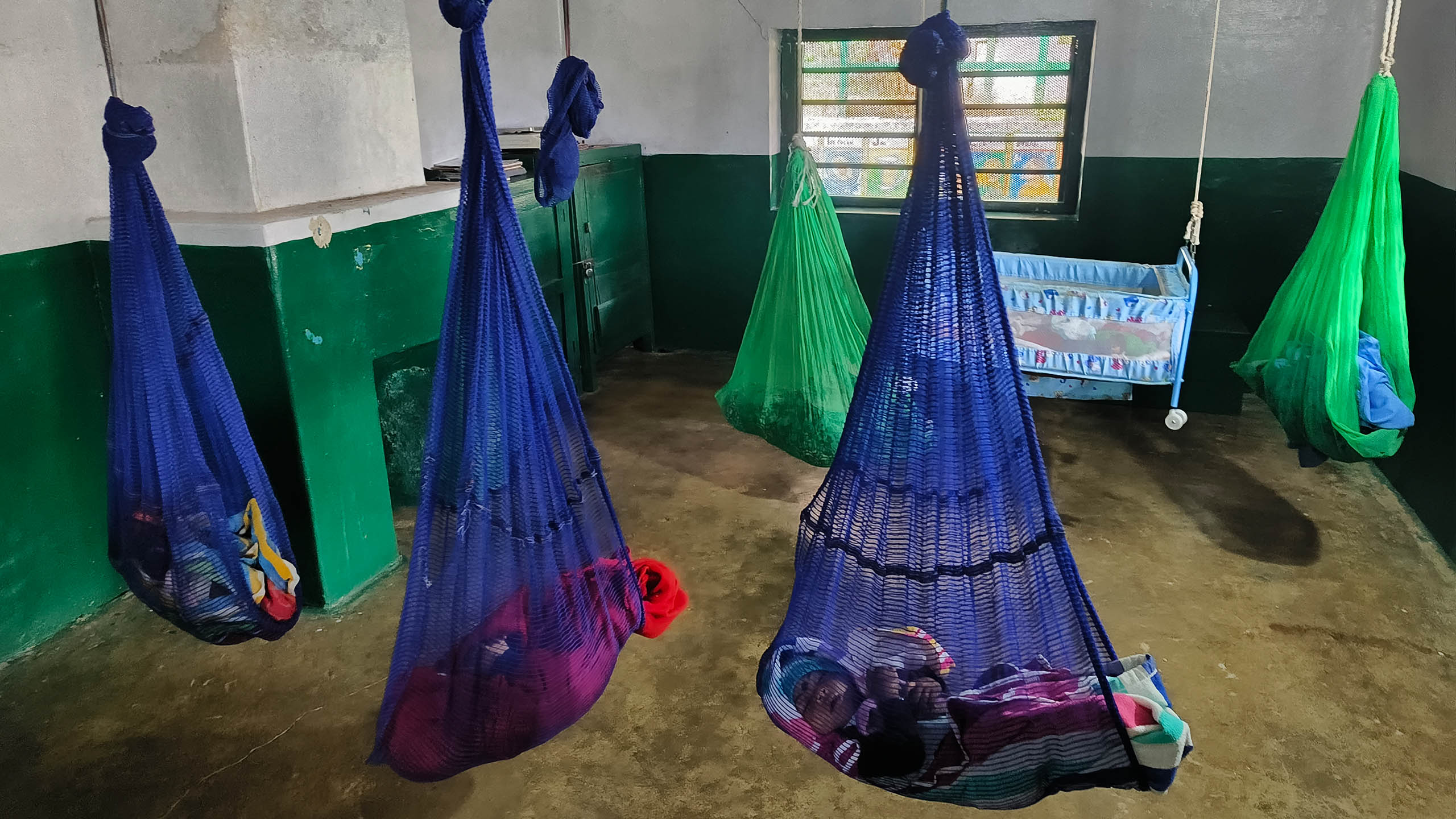
But as time went on, she started to fear for her children. “Every morning, I leave them at the [estate-run] crèche and pray. One caretaker handles 10-15 children. Even though my hands are picking leaves, my mind is with my daughters: Are they safe? Has a leopard come? Are they alive?” she said, breaking down as she spoke. “We do not live here because we want to. We live here because we have no other option.”
Poonam’s relatives, Jitram (28) and Sushanti Kumari (27), have been at the same estate for the past eight years. It’s 10 kilometres from the estate where young Roshni was killed. “I knew the family well,” Sushanti Kumari told The Migration Story. “After the girl died, her mother was completely shattered. Within a week, they left for their village.”
Jitram and Sushanti Kumari have regularly seen or heard about wildlife encounters that have ended in injury, as well as narrow escapes involving both adults and children. “Countless children have died like this. We have become used to it,” Sushanti Kumari said. “We came here just two years after our marriage. When I delivered my child, I had no option but to leave the baby in the crèche before going to work. What else can we do?”
Despite the constant fear they live with, they have slowly learned to survive in these estates. “We know when elephants come, where leopards hide, and how to run if a bear appears. But new workers know none of this. No department has ever created awareness about this in Hindi,” she said.
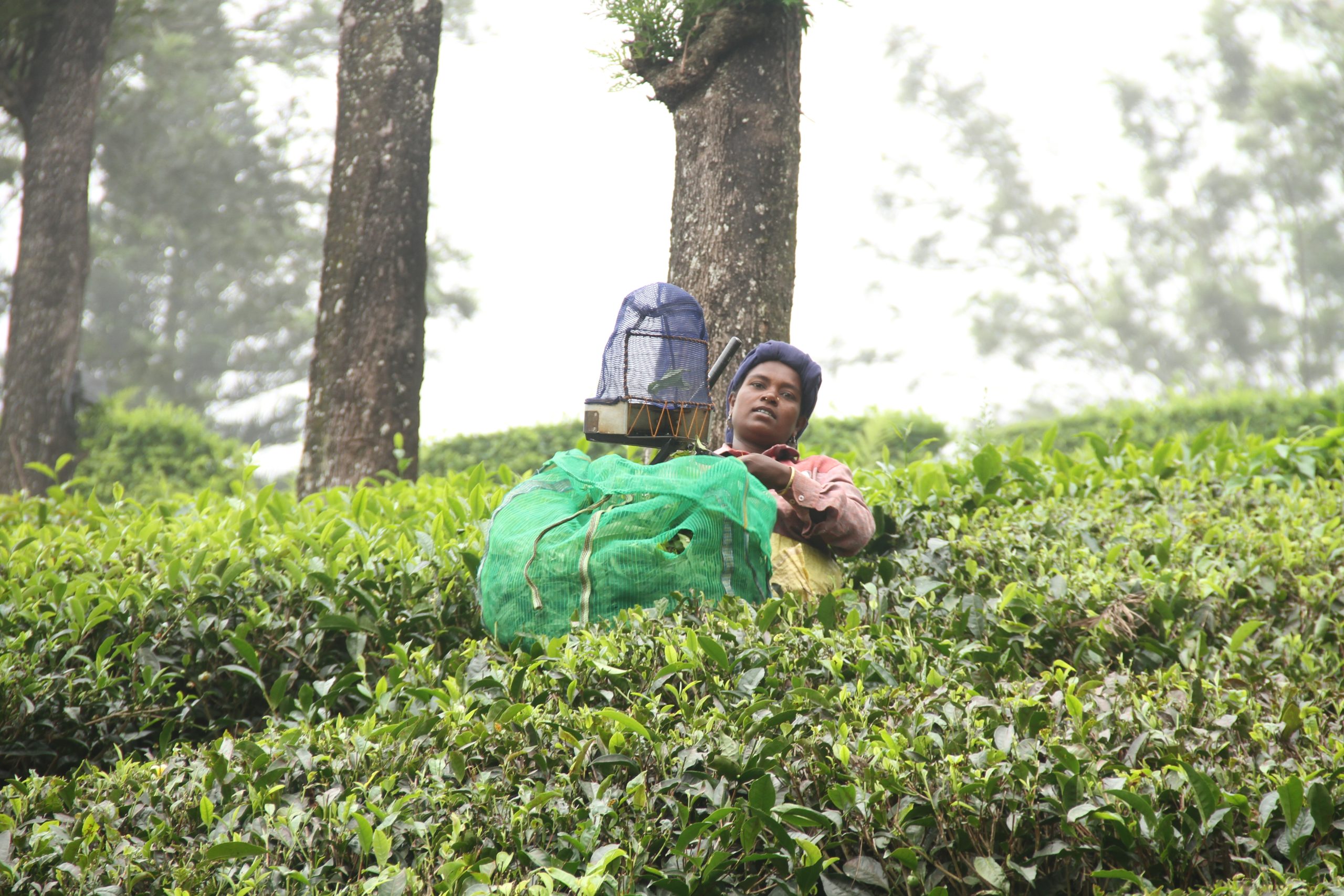
Mazitha Altaf, who moved here from Assam two years ago, described a life clouded with the constant fear of wildlife attacks. “Every moment, I’m scared. Will a bear come? Will a leopard appear? Our house is surrounded by bushes where leopards hide. We live in fear,” said the 28-year-old as she picked tea leaves.
Mazitha is from Ranthali village, Nagaon district – the same place that Nurul Islam, who was killed by a bear, was from. Heartbroken after his death, Nurul’s parents moved back to their village and now do daily-wage work. Mazitha, like many migrant workers on the estate, has no choice but to leave her two-year-old son at the crèche, despite the danger of wild animals lurking about.
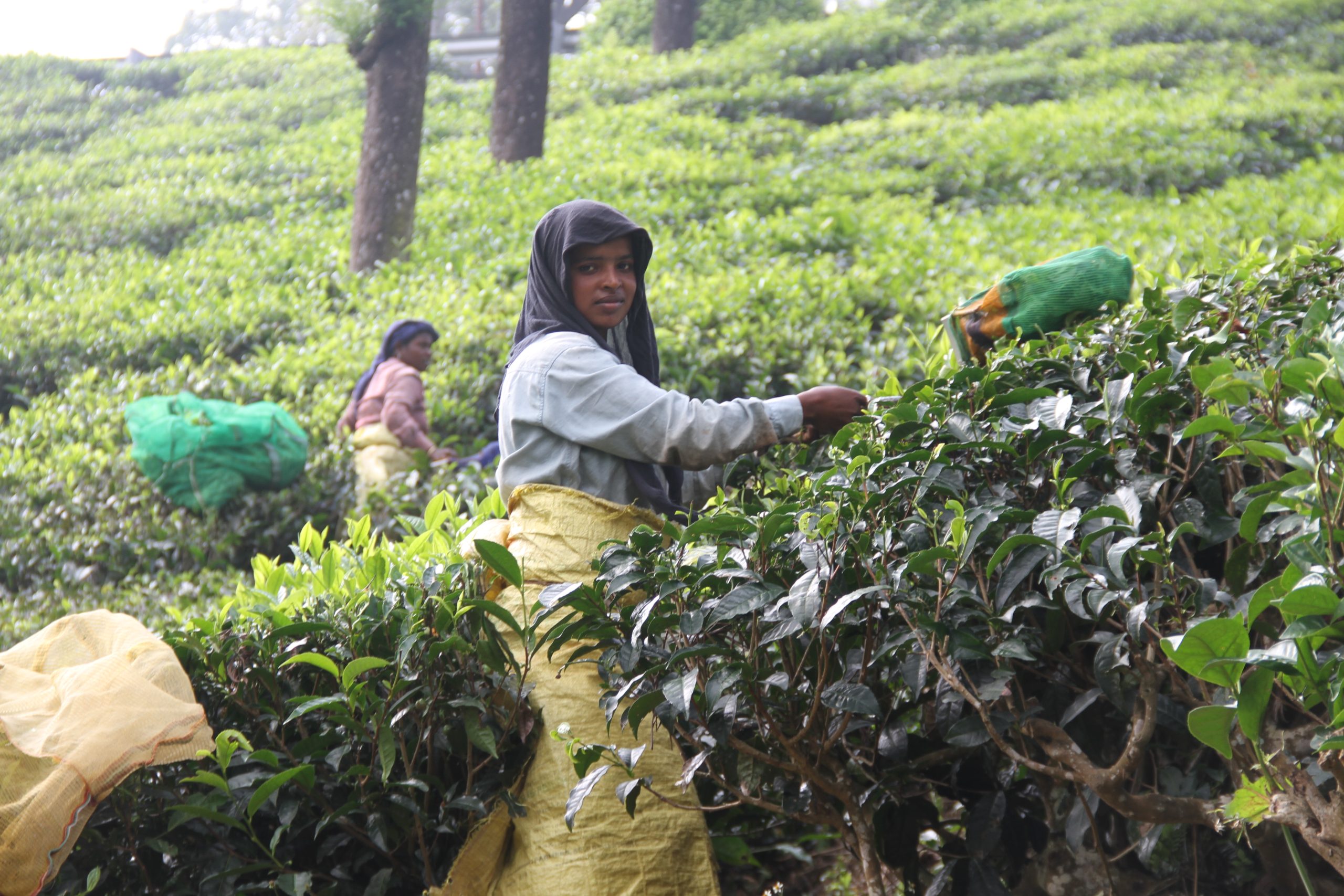
Mazitha’s relative, Azilon Rafik, who came to work on the estates six months ago with her husband and three children, felt she had already seen the worst. “When we came here by bus, Valparai looked beautiful. But in the first week, I saw leech bites and elephants troubling us, heard of leopards and bears, and was constantly worried about my children’s future. I even thought of going back,” she told The Migration Story as she picked tea leaves on a drizzly morning.
She couldn’t go back, of course. Her family’s loans have forced her and her husband to work on the estate. “If we go back, we can’t earn enough to repay the debt. My husband and I work from 7 a.m. to 5:30 p.m., one and a half shift, and together earn over 1,100 rupees a day.”
Irregular work, inadequate pay and poverty has forced many of these workers to migrate to the estates, despite the danger, the poor living conditions and the harsh weather. “The climate here is nothing like in our village – sudden cold, heavy rain, then harsh sun. If only we had proper toilets, drinking water, and homes with good roofs [that don’t leak], we could live with a little comfort at least,” Azilon added.
UNSAFE HOUSING AND INADEQUATE TRAINING FOR MIGRANTS
Mazitha, who earns 444 rupees at the end of a 10-hour work day on the estate, also painted a sordid picture of the workers’ settlements, approximately 400 metres from the tea bushes.
“The estate allotted us a tiny house, eight feet wide and 14 feet long, with a thin asbestos roof, which leaks when it rains. Our line [settlement] has ten such houses, and four lines share a single toilet block, with around10 toilets and only one drinking water tap. So, we have to walk 200-350 metres each time we need water or have to use the toilet,” she said.
For daily supplies, workers usually turn to a ration shop on the estate, but since they cannot use their ration cards in Valparai, they end up paying high prices for food. “Since our ration cards aren’t transferred here, we buy rice for 20 rupees a kg from local residents,” she added.
Responding to questions, Coimbatore District Collector Pavankumar G. Giriyappanavar wrote on WhatsApp: “We had a meeting with all the estates in the district and instructed them to provide basic amenities to the workers and ensure their safety. We will issue instructions again and ensure compliance.”
Pradeep Sukumar, Secretary, Planters Association of Tamil Nadu, which represents Valparai’s estate owners, said: “We have instructed all estates to remove bushes and the work is ongoing. But since new shoots sprout in a few days, it may look like the bushes have grown back. We have also instructed estates to repair houses, fix toilets and improve water supply.”
Sukumar added that the Forest Department, the estates and the labour unions are working on these issues – together. “According to government norms, houses built in the 1950s have toilets farther away. But houses built after the 1991 plan [that specified guidelines for estate workers’ homes] and especially after 2000, have toilets at the back and drinking water taps in the front.”
While Sukumar claims that the planters’ association regularly “guides” workers on the human-wildlife conflict, most migrants this reporter spoke to said that this guidance was not very practical or hands-on and that it was mostly in Tamil.
Life on the estates is hard and dangerous, but not only for migrant workers.
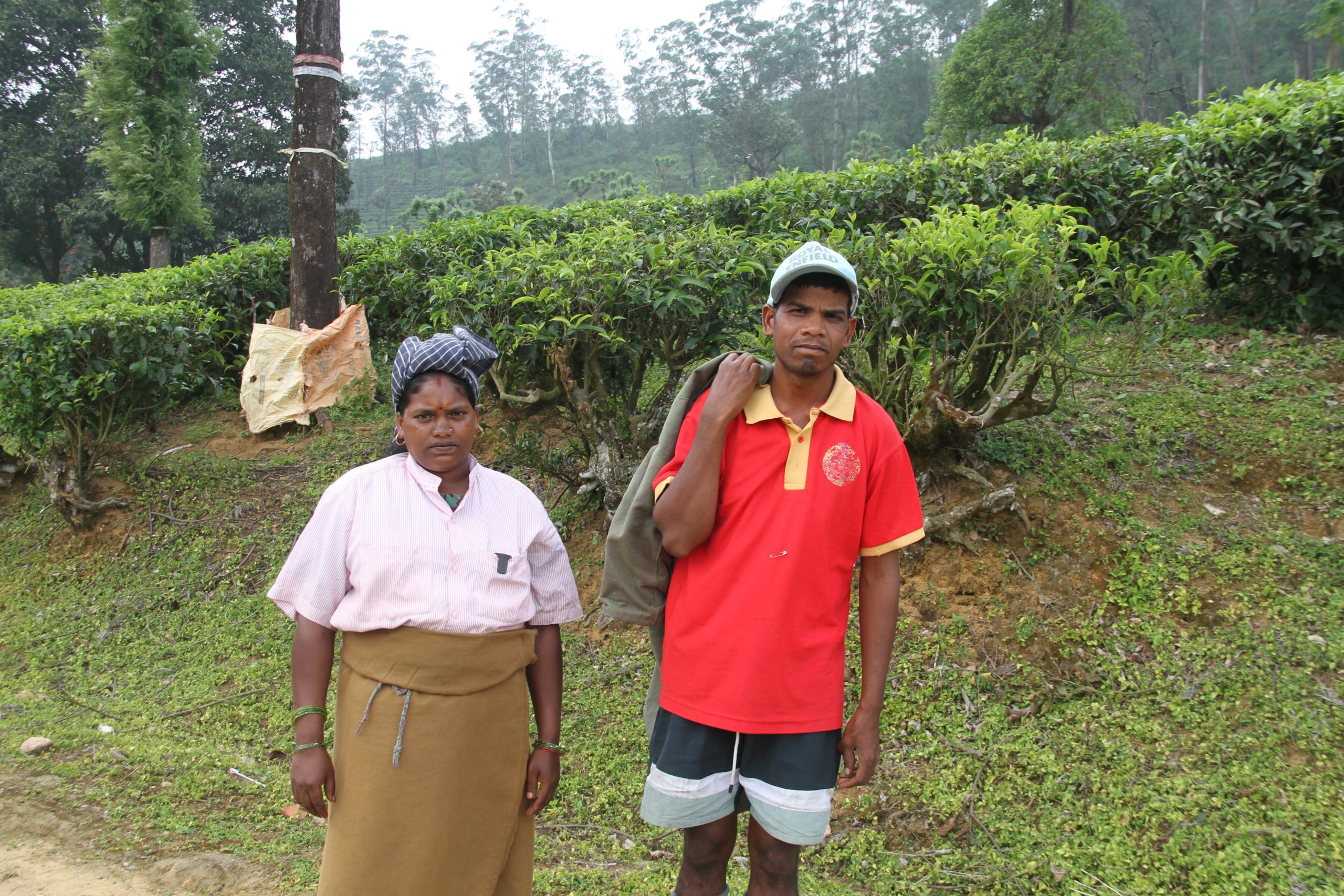
Murugan Marimuthu, 56, the third generation of his family to have lived and worked on an estate, put it quite bluntly: “My grandparents were brought here from Theni district as bonded labourers. My parents worked and died here. I have worked here for 40 years. Nothing has changed.”
His home had a mud floor for decades, and he had to use his own savings to repair it. “Everyday someone is killed by a leopard, elephant or a bear,” he added, shrugging his shoulders.
The owner of the estate built a toilet and installed a drinking water tap near his home only 10 years ago. Until then, he and his family had to walk several hundred metres to relieve themselves or get water.
“The owners want only our labour. Nothing will change. I am saying this as a third-generation worker,” Murugan insisted.
Prasanth Shanmugasundaram is a multimedia journalist based in Tamil Nadu. His work primarily covers social justice, equality, politics, climate change and crime.